


54.
Midway (1976)
(1976)
Even setting aside its excessive and awkward reliance on archival footage, Midway feels less like a gripping war epic and more like a dramatized history lesson—the kind that leaves students zoning out to the drone of a monotone lecture.
View Review →

53.
Black and White in Color
(1976)
Black and White in Color offers a rare, satirical look at colonial life during World War I, but its misplaced focus on shallow European characters overshadows the more compelling African perspectives at its core.
View Review →

52.
Cousin, Cousine
(1976)
Cousin, Cousine is a shallow, episodic film that uses “romance” as a smokescreen for selfishness.
View Review →

51.
A Star Is Born (1976)
(1976)
A Star Is Born (1976) offers impressive concert scenes and Streisand’s star power—but it’s the least convincing version of the classic tale.
View Review →

50.
Two-Minute Warning
(1976)
As a disaster movie, Two-Minute Warning is technically competent and moves well from scene to scene, but it never rises above being a hollow exercise.
View Review →

49.
Logan's Run
(1976)
Logan’s Run dazzles with its futuristic world and bold ideas but stumbles into mediocrity the moment it leaves the dome, squandering its potential with a lifeless second half.
View Review →

48.
In the Realm of the Senses
(1976)
Beneath In the Realm of the Senses’ graphic imagery lies a compelling critique of societal repression, but it’s buried under the weight of its own excess.
View Review →

47.
The Incredible Sarah
(1976)
More informative than thought-provoking, The Incredible Sarah entertains with Glenda Jackson’s dynamic performance and stunning production design. However, its shallow, Wikipedia-like approach fails to examine who Bernhardt truly was and what it meant to be one of the first celebrities.
View Review →

46.
Silver Streak
(1976)
Wilder plays the mishaps—walking into wrong compartments, witnessing things he shouldn’t, being mistaken for someone else—with an odd restraint. Unlike Peter Sellers, who would fully embrace the physical absurdity, Wilder mostly reacts with frustration and yelling, making it feel more like overplayed irritation than genuine comedic escalation.
View Review →

45.
Fellini's Casanova
(1976)
Fellini’s Casanova is an admirable artistic statement, but one that pushes its extremes so relentlessly that it risks suffocating the viewer.
View Review →

44.
The Killing of a Chinese Bookie
(1976)
The Killing of a Chinese Bookie frustrates—not just because of its slow pace and prolonged sequences, but because of Cassavetes’ decision to avoid exploring the most compelling aspects of Cosmo’s downfall.
View Review →

43.
Voyage of the Damned
(1976)
Voyage of the Damned feels like an event film. But as a retelling of history, the film dilutes the real-life tragedy, turning it into the backdrop of a passable but not particularly tense or thrilling disaster film.
View Review →

42.
King Kong (1976)
(1976)
King Kong feels like a half-hearted retread—neither bold enough to reinvent the story nor strong enough to stand on its own. You’re better off watching the 1933 original or Jackson’s 2005 remake.
View Review →

41.
The Enforcer
(1976)
While The Enforcer may not be the most memorable of action films, its cultural impact is undeniable. It paved the way for grittier, more violent police and agent movies and deserves credit for its influence.
View Review →

40.
The Judge and the Assassin
(1976)
While The Judge and the Assassin‘s commentary is powerful, its heavy-handed moments and detached tone make it a film easier to analyze than to connect with emotionally.
Review coming soon

39.
Canoa: A Shameful Memory
(1976)
Canoa is a vital and informative account of how manipulation, fear, and religious hypocrisy can drive ordinary people to horrific acts without remorse. A stronger balance between substance and storytelling could have made it a truly unforgettable piece.
View Review →

38.
Maîtresse
(1976)
Maîtresse feels more concerned with shocking the audience than truly challenging them, and its reluctance to engage with deeper questions about its characters’ desires or vulnerabilities prevents it from reaching its full potential.
View Review →

37.
Marathon Man
(1976)
Marathon Man follows Hoffman’s relatable everyman as he gets caught up in a whirlwind of danger and secrets. It doesn’t fully stick the landing, but the journey is packed with thrills.
View Review →

36.
Silent Movie
(1976)
Silent Movie is Mel Brooks’ bold experiment in reviving the charm of silent cinema, filled with quick gags and playful cameos, but it ultimately feels more like a fun project than an essential classic.
View Review →

35.
Chess of the Wind
(1976)
A visually stunning rediscovered gem, Chess of the Wind explores societal decay and the oppression of women, but its unfocused script and underwhelming direction hold it back from greatness.
View Review →

34.
Family Plot
(1976)
Family Plot shows that Hitchcock wasn’t fully ready to embrace the stylistics of the 1970s, but it remains a fun and breezy swan song for one of cinema’s greatest directors.
View Review →

33.
The Missouri Breaks
(1976)
The Missouri Breaks remains a curiosity rather than a classic. It’s a film that begs to be seen, not because it’s great, but because it’s so strange. Brando’s performance alone is worth the price of admission, even if it comes at the expense of the movie’s coherence.
View Review →

32.
Jacob the Liar
(1976)
Jakob der Lügner tells the story of a man who lifts the spirits of a Jewish ghetto by pretending to have a secret radio. While it doesn’t delve deeply into its central premise of hope built on lies, it remains a touching tale and an effective glimpse into life in the ghetto.
View Review →

31.
The Tenant
(1976)
The Tenant leans further into abstraction, emphasizing mood over narrative cohesion. It remains an intriguing, if flawed, work—more fascinating to analyze than to experience.
View Review →

30.
Face to Face
(1976)
Face to Face is a fascinating but uneven psychological study—one that succeeds not because of Bergman’s direction, but in spite of it.
View Review →

29.
Nights and Days
(1976)
Nights and Days is an ambitious and intimate, though not constantly engaging, exploration of whether passion or endurance keeps a marriage alive, set against the backdrop of Poland’s history and framed in the epic style of Gone with the Wind and Doctor Zhivago.
View Review →

28.
Bugsy Malone
(1976)
At times, Bugsy Malone feels like a big-budget school play, but the concept is so unique and charming, and Foster is so fantastic, that it makes it worth checking out.
View Review →

27.
The Omen
(1976)
The Omen is best experienced as a visual accompaniment to its masterpiece of a score, rather than the other way around. While the film itself is engaging in moments and effectively eerie, it’s Goldsmith’s music that makes it unforgettable.
View Review →

26.
The Bad News Bears
(1976)
While it doesn’t avoid all the tropes of the underdog sports movie, The Bad News Bears stands out for its unpolished realism and occasional surprising turns. It’s not perfect, but it’s a fun, unconventional sports movie with more bite than you might expect.
View Review →

25.
The Last Tycoon
(1976)
As a portrait of a powerful yet emotionally guarded Hollywood producer navigating a changing industry, The Last Tycoon has the makings of a gripping character study. But much like its protagonist, the film holds back when it should command attention, remaining more subdued than it needed to be.
View Review →

24.
Obsession
(1976)
Obsession is a film with a fantastic Hitchcockian gloss—Herrmann’s score is monumental, and the melodrama is undeniably enticing—but it’s all in service of a shallowed-out script.
View Review →

23.
The Outlaw Josey Wales
(1976)
The Outlaw Josey Wales remains a significant stepping stone in Eastwood’s career, hinting at the introspective storytelling he would later master, but without fully reaching that level yet.
View Review →

22.
The Man Who Fell to Earth
(1976)
Even when The Man Who Fell to Earth meanders or loses its way, Bowie’s presence anchors it, making it one of the most unique and haunting entries in the genre.
View Review →

21.
The Pink Panther Strikes Again
(1976)
With Peter Sellers in fine form and Herbert Lom’s Dreyfus at his best, The Pink Panther Strikes Again finds comedy in chaos, doubling down on the absurdity even if it sacrifices its detective roots.
View Review →

20.
Mr. Klein
(1976)
Mr. Klein is an engrossing psychological mystery that examines identity, complicity, and the fragility of privilege. While it succeeds in creating a sense of dread and raising thought-provoking questions, it falters in its final moments by failing to fully convey the despair and realization of its protagonist.
View Review →

19.
1900 (Novecento)
(1976)
It doesn’t quite belong in the same league as The Godfather or Once Upon a Time in America, but 1900 remains a fascinating, visually stunning epic that captures history in a way few films dare to attempt.
View Review →

18.
Mikey and Nicky
(1976)
Mikey and Nicky remains a film well ahead of its time. Messy, emotionally charged, and deeply human, it paved the way for the kind of behavior-driven storytelling that would only gain appreciation in the decades that followed.
View Review →
17.
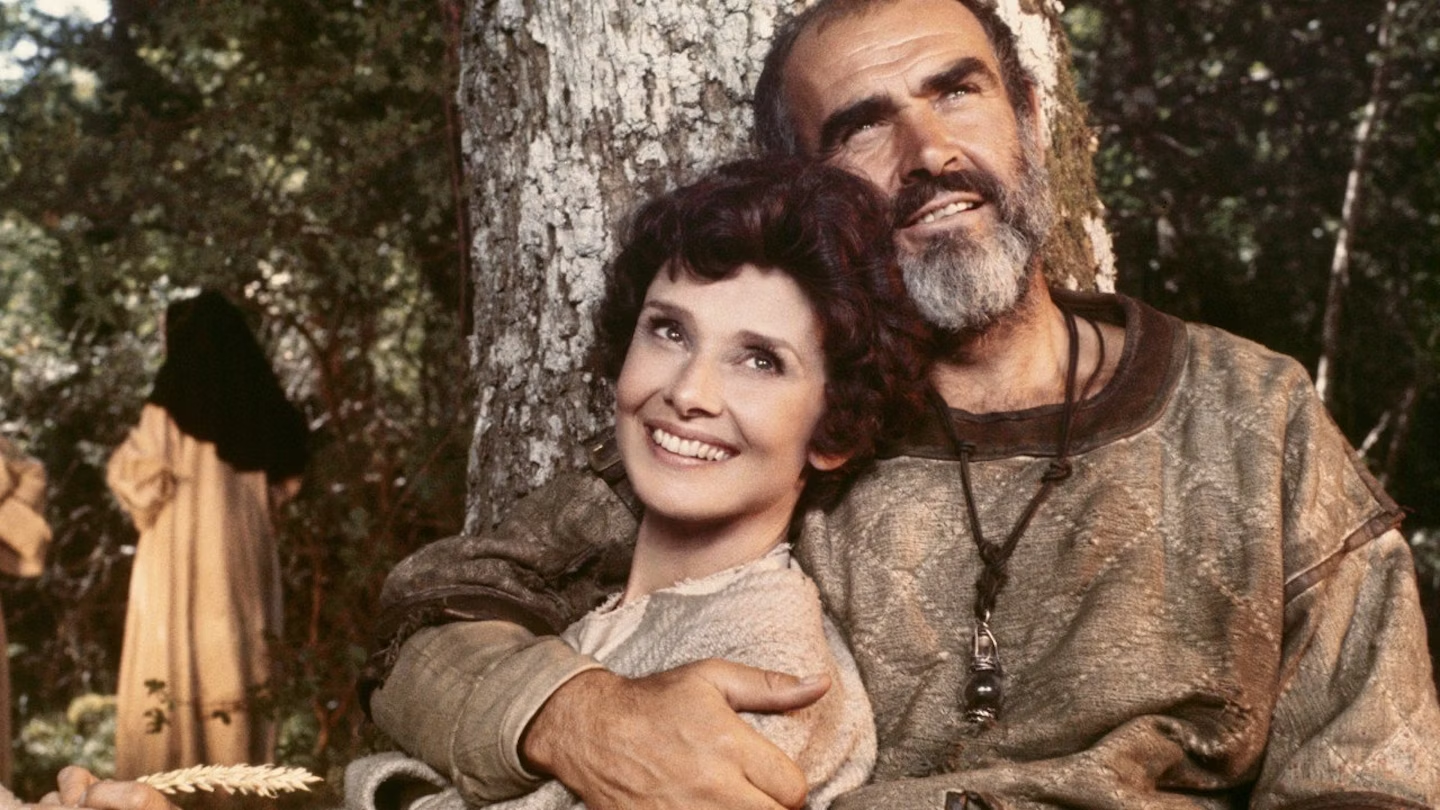
Robin and Marian
(1976)
Robin and Marian is a thoughtful deconstruction of heroism and sacrifice, offering a reflective take on the Robin Hood legend. Anchored by two perfectly cast leads and a powerful score, it rewards those willing to embrace its quieter, introspective tone with a story that lingers long after it ends.
View Review →

16.
Murder by Death
(1976)
Murder by Death combines sharp satire and zany humor, offering a brisk, entertaining take on classic detective stories.
View Review →

15.
The Seven-Per-Cent Solution
(1976)
Seeing Holmes undergo treatment with Sigmund Freud is a fascinating concept, and the film executes it with both intelligence and finesse. That the mystery itself is just as engaging makes it all the more rewarding. With its inventive premise, strong performances, and polished production, The Seven-Per-Cent Solution remains a standout and unforgettable entry in the Holmes canon.
View Review →

14.
Insiang
(1976)
Insiang shifts from the broader societal lens of Manila in the Claws of Light to an intimate and emotionally charged tale, with Hilda Koronel’s compelling performance anchoring a vivid portrayal of life for a young woman in Manila’s slums.
View Review →

13.
The Shootist
(1976)
The Shootist belongs to Wayne. His presence in every scene, coupled with the real-life parallels to his own battle with cancer, makes it one of the most fitting matches of actor and character in Hollywood history. That the film stands strong on its own, with poignant dialogue, memorable supporting characters, and well-executed shootouts, only makes Wayne’s farewell that much more bittersweet.
View Review →

12.
The Front
(1976)
The Front understands that taking a stand isn’t always a grand, heroic gesture—it often comes from ordinary people backed into a corner, forced to recognize the cost of their own inaction.
View Review →

11.
Seven Beauties
(1976)
Seven Beauties is messy by design, intentionally discomforting, and laced with a biting cynicism about human nature. It asks: who do we become to achieve our selfish goals and feed our pride? And maybe more importantly—were we always that person to begin with?
View Review →

10.
Carrie
(1976)
Carrie is emotionally raw, technically inventive, and endlessly influential. While some elements haven’t aged gracefully—particularly the score and the film’s handling of religious extremism, which later films would explore with more nuance—the emotional devastation at the film’s center still resonates.
View Review →

9.
Bound for Glory
(1976)
A richly immersive portrait of Woody Guthrie’s world, Bound for Glory captures the soul of a generation through poetic visuals and restrained storytelling, even if it occasionally slips into standard biopic rhythms.
View Review →

8.
Cria!
(1976)
Even without a traditional plot—and even if its metaphor feels incomplete—Cria! still speaks volumes about memory, guilt, and the quiet resilience of children.
View Review →

7.
Small Change
(1976)
François Truffaut’s Small Change is a tender, quietly powerful celebration of childhood, capturing the small moments that gently shape who we become.
View Review →

6.
Network
(1976)
Network doesn’t fully sustain its brilliance across its entire runtime, but when it hits, it’s a winning combination of sharp satire, smart dialogue, and thrilling tension. Even as it softens in the second half, it remains a prophetic and darkly funny commentary on media madness—one that feels more accurate with every passing year.
View Review →

5.
All the President’s Men
(1976)
All the President’s Men is an enduring achievement that makes journalism feel heroic without ever exaggerating it, elevated by fantastic performances, immersive sound, precise direction, and authentic production design — though its realism sometimes comes at the cost of accessibility.
View Review →

4.
Kings of the Road
(1976)
Wim Wenders’ Kings of the Road captures the quiet, reflective therapy of travel in post-war Germany—an understated meditation on time, change, and connection.
View Review →

3.
Assault on Precinct 13
(1976)
With its relentless tension, iconic score, striking visual style, and masterful use of sound, Assault on Precinct 13 stands as one of the best siege films ever made—one that continues to influence action and horror filmmakers today.
View Review →

2.
Taxi Driver
(1976)
From the lived-in performances to the precise editing, moody cinematography, haunting score, and immersive sound design, every element in Taxi Driver works to elevate the script. It is Scorsese’s first true masterpiece—a film that pushed cinema into darker, more psychological territory. It captures an era, a city, and a kind of loneliness that still resonates today.
View Review →

1.
Rocky
(1976)
People often remember Rocky‘s last 15 minutes, but it works so well only because the hour leading up to it is such a beautifully observed portrait of ordinary people who never got their shot. It reminds us that going the distance isn’t about winning—it’s about proving to yourself that you’re worth the fight.
View Review →