
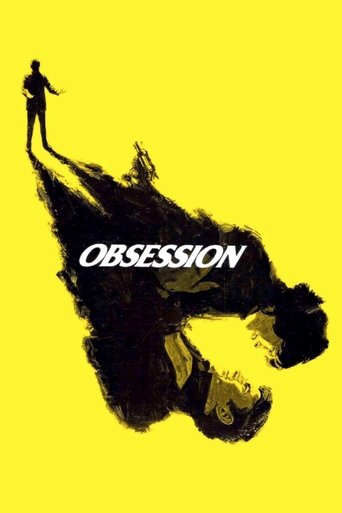

1976 saw directors attempting to update their voice for the New Hollywood movement, with often awkward results. Films like Family Plot or Arthur Penn’s The Missouri Breaks are interesting, but ultimately feel dated in how they try to shoehorn the grounded, adult style that Scorsese and Coppola were using to evolve cinema into old-fashioned formats. The results are oddly detached from the energy of the moment. At the same time, it was also a year of farewells to genre icons and traditions, with The Shootist and Robin and Marian offering definitive send-offs.
In that cinematic climate, Brian De Palma, still young but already establishing his voice, had an especially revealing year with Carrie and Obsession. Both films feel like exercises in updating 1950s aesthetics for modern audiences. Carrie, of course, took Hitchcockian suspense and pushed it into the realm of psychological horror, helping define the future of teen-centered horror cinema.
Obsession, on the other hand, is a much more direct homage to Hitchcock, specifically Vertigo. De Palma had the opportunity to craft a truly dark and devastating film from Paul Schrader’s original script, and on paper, it seemed like a perfect fit. Schrader, fresh off Taxi Driver, brought a disturbing emotional edge and moral ambiguity that was becoming part of Hollywood’s new voice. But De Palma, and the studio, felt Schrader had gone too far, particularly in how the story dealt with incest and psychological ruin. Even in the bold climate of New Hollywood, that kind of subject matter crossed a line. And perhaps De Palma, still finding his footing in the industry, wasn’t ready to push things quite that far, at least not yet.
The result is a film with a fantastic Hitchcockian gloss, Herrmann’s score is monumental, and the melodrama is undeniably enticing, but it’s all in service of a shallowed-out script. You can see what it could have been, and that almost makes it more frustrating.
Individual scenes still work. The opening ten minutes are extremely captivating, and the Florence sequence where Michael and Sandra meet is one of the film’s highlights, their discussion about art restoration is thematically rich and surprisingly layered. Later, the airport flashback scene is also well executed, paralleling memory and emotion with great visual rhythm.
Yes, it’s pure Hitchcock pastiche, but it’s beautifully done pastiche.
The biggest problem, structurally, comes early: when Michael’s wife and daughter are kidnapped, he’s immediately willing to pay the ransom. The police intervene and push him toward a fake drop, but this removes any moral conflict or character flaw that might justify the arc later. He’s already the “good guy,” so when the story leans into ideas of guilt and second chances, it rings hollow. There’s no shift. No reckoning.
Cliff Robertson tries to bring some coldness to Michael, but not enough to create a meaningful transformation. John Lithgow fares much better, delivering a theatrical and entertaining performance as the antagonist, with that exaggerated cadence and Southern accent, he chews just enough scenery. And Geneviève Bujold gives the film its heart. She sells the tragedy and emotional confusion with sincerity.
But what truly elevates Obsession, maybe more than anything else, is Bernard Herrmann’s score. It’s operatic, dramatic, and overwhelming in all the best ways. The use of vocals, strings, and sweeping melodies gives even the film’s more emotionally underwritten moments a sense of grandeur. It makes everything feel more capital-D Dramatic, and in a good way.
Between Herrmann’s final, breathtaking score and De Palma’s growing confidence behind the camera, with fluid movements, elegant dissolves, and tightly managed pacing, Obsession becomes a stylish and compelling exercise, even if it doesn’t fully land as a character study, and things fall apart if you think about it afterwards.
Had De Palma made this film a few years later, after Dressed to Kill or Blow Out, maybe he’d have embraced Schrader’s bleaker vision and delivered something more devastating and memorable. Then again, we probably wouldn’t have gotten Herrmann’s final masterpiece. In hindsight, that trade-off might’ve been worth it. If nothing else, Obsession gave one of cinema’s greatest composers the chance to go out with a banger.
- 1Everytime
- 2Hadestown: The Musical
- 3Tuner
- 4Minotaur
- 5You Can See Everything
- 22Obsession#22 of 219
- 1Rocky
- 2Taxi Driver
- 3Assault on Precinct 13
- 4Kings of the Road
- 5All the President's Men
- 23Obsession#23 of 51
- Where to watch
 Criterion Channel
 Hollywood SuiteArrow
- Where to watch
- Not available for streaming
 Play trailer


- Original title
- Obsession
- Director
- Brian De Palma
- Cast
- Cliff Robertson, Geneviève Bujold, John Lithgow, Sylvia Kuumba Williams, Wanda Blackman, J. Patrick McNamara, Stanley J. Reyes, Nick Kreiger
- Rated
- PG
- Screenwriter
- Brian De Palma, Paul Schrader
- Composer
- Bernard Herrmann
- Cinematography
- Vilmos Zsigmond
- Editor
- Paul Hirsch
- Country


- Language
- English
- Budget
- $1.4 million
- Box office
- $4.468 million