
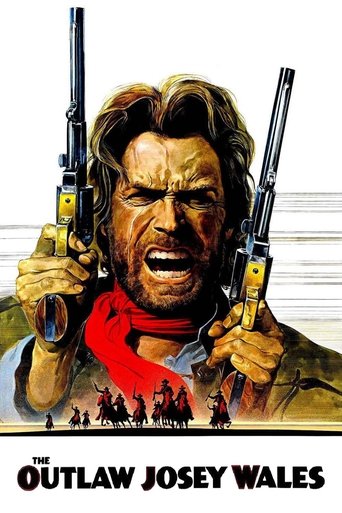

In 1976, Clint Eastwood had gained so much power in Hollywood that he was able to fire director Philip Kaufman from The Outlaw Josey Wales and take over the film himself, citing creative differences. Kaufman’s methodical approach frustrated Eastwood, particularly his tendency to spend too much time fine-tuning supporting characters. As both the lead and co-producer, Eastwood forced Kaufman out, a move that led to the Directors Guild of America implementing the “Eastwood Rule,” which prevents actors from dismissing a director and assuming control of the film. The takeover reinforced Eastwood’s growing dominance in Hollywood, and with The Outlaw Josey Wales, he not only solidified himself as a bankable star but also further developed his identity as a director.
The film ultimately fits neatly within Eastwood’s filmography, continuing his thematic exploration of vengeance, morality, and reluctant heroism. The character of Josey Wales serves as both an extension of Eastwood’s Man with No Name persona from Sergio Leone’s Westerns and a precursor to the deeper deconstruction of the Western genre seen in his 1992 masterpiece Unforgiven. The film also had a lasting influence on later revisionist Westerns, including Logan (2017), which borrowed its themes of a hardened warrior forced into an unexpected familial bond.
Both as an actor and a director, Eastwood balances the film’s darker themes of revenge and redemption without letting it become too grim, mixing in well-timed humor and nicely staged action sequences. Josey’s constant tobacco-spitting and his deadpan banter with Lone Watie, played by Chief Dan George, provide some of the film’s best comedic moments. The action itself isn’t particularly flashy, but the stand-offs and shootouts are efficient and engaging, often emphasizing Eastwood’s cool, calculated presence rather than elaborate choreography.
Like The Enforcer, another Eastwood-led film from 1976, The Outlaw Josey Wales features minority representation in ways that were not common for the time. The character of Lone Watie is given a significant role, treated with more depth than many Indigenous characters in earlier Westerns. However, some moments don’t hold up as well under modern scrutiny, such as the outdated trope of an older Indigenous man engaging with a much younger woman, which now feels unnecessary and awkward despite being played for laughs. While the film deserves credit for giving Lone Watie a strong presence, it also highlights the limitations of representation in Hollywood at the time.
While The Outlaw Josey Wales is a well-crafted Western, it never quite lands an emotional core. Josey moves from one group to another, his murdered family is barely felt beyond a plot device, his brief bond with Jamie is cut short, and while his relationship with Lone Watie adds some depth, it’s not enough to anchor his growth. By the final act, he has a makeshift community around him, but the film never truly convinces us that he has forged a meaningful connection with them. His evolution is implied, but it never feels personal or fully realized.
As entertainment, The Outlaw Josey Wales works well for what it is, a solid Western driven by Eastwood’s presence. There are great individual sequences, especially those that highlight Josey’s strategic thinking, like when he sends a decoy horse to mislead his enemies or how his reputation spreads in every town he enters. These moments emphasize the mythic, larger-than-life nature of the character, even when the film itself doesn’t fully commit to deeper emotional resonance.
Ultimately, The Outlaw Josey Wales is a strong, enjoyable Western, but not particularly memorable compared to what Eastwood accomplished earlier or later. It remains a significant stepping stone in his career, hinting at the introspective storytelling he would later master, but without fully reaching that level yet.
- 1Rocky
- 2Taxi Driver
- 3Assault on Precinct 13
- 4Kings of the Road
- 5All the President's Men
- 22The Outlaw Josey Wales#22 of 51
- Where to watch
- Rent or buy at Apple TV Store, YouTube, Amazon Video
- Where to watch
- Rent or buy at Apple TV Store, Amazon Video
 Play trailer


- Original title
- The Outlaw Josey Wales
- Director
- Clint Eastwood
- Genre
- Western
- Cast
- Clint Eastwood, Chief Dan George, Sondra Locke, Bill McKinney, John Vernon, Paula Trueman, Sam Bottoms, Geraldine Keams
- Rated
- PG
- Screenwriter
- Philip Kaufman, Sonia Chernus, Clint Eastwood, Michael Cimino
- Composer
- Jerry Fielding
- Cinematography
- Bruce Surtees
- Editor
- Ferris Webster
- Country
- Language
- English
- Budget
- $3.7 million
- Box office
- $31.8 million