
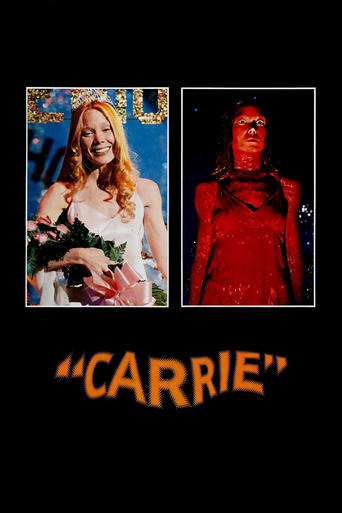

Back in 1976, Hollywood studios were surprisingly eager to adapt Carrie, a novel by an unknown high school English teacher from Maine who, at that point, had never published a book. The manuscript had actually been tossed in the trash by the author himself before his wife rescued it, convinced it was worth finishing. That author, of course, was Stephen King, and Carrie would mark the beginning of one of the most prolific and influential literary careers in modern history. Today, King’s work has inspired more than a hundred films and series, many of them cornerstones of the horror genre. But Carrie was the first, and it set the bar high.
The film adaptation, directed by Brian De Palma, turned out to be a defining moment for horror cinema. It was a relatively low-budget project (around $1.8 million), but it became a surprise box office hit and a critical success, earning two Oscar nominations, an almost unheard-of feat for a horror movie at the time (and still rare today). More than that, it introduced the world to one of the most indelible images in movie history: Carrie White, soaked in pig’s blood, eyes wide with heartbreak and rage, as flames consume her high school gym in the background. A single frame forever burned into pop culture consciousness.
De Palma, whose earlier films (Sisters, Phantom of the Paradise) had already showcased his flair for suspense and stylization, brought a distinctly Hitchcockian sensibility to Carrie. His use of split screens, long tracking shots, and sudden visual shifts elevated what could have been a pulpy high school horror story into something formally daring. But he also tapped into a rich emotional undercurrent, something most horror films of the era either ignored or flattened. Carrie’s biggest achievement isn’t in how it scares the audience, but in how deeply it makes them feel for its title character.
The most celebrated section of the film, and rightfully so, is the prom sequence, which plays like a tragedy in slow motion. De Palma lingers on Carrie’s brief moment of joy with almost painful sincerity. For once, she’s not the outcast. She’s glowing, seen, even admired. Spacek’s big smile during the crowning moment is enough to melt your heart, and make what follows that much more devastating. The slow build to the prank is masterfully executed, full of dramatic irony, tight editing, and a suffocating sense of dread. And when the bucket finally drops, everything erupts. The thick, richly colored blood (a noticeable upgrade from the watery red syrup common in horror of the era) coats Carrie like a second skin. Then come the screams, the fire, the deaths, all orchestrated with split-screen flourishes and sensory overload that cement the scene as one of the most iconic climaxes in horror history.
That said, the rest of the movie doesn’t quite hold up to the brilliance of the prom scene. Some sequences now feel clunky or dated. Pino Donaggio’s score oscillates between lovely and silly, particularly during scenes like the gym detention, where it makes the scene almost obnoxious with its synth sounds. The casual use of physical slaps between characters, even from authority figures, is jarring from a modern perspective. And while Piper Laurie’s performance as Margaret White was bold enough to earn her an Oscar nomination, it now comes across as too theatrical and loud. Her unfiltered fervor leaves little room for subtlety or unpredictability, and the emotional complexity that the character could have had, especially as the film touches on religious fanaticism, never fully comes through. The depth and tragedy that the script attempts is never convincing.
Sissy Spacek, however, remains phenomenal. She was 27 at the time of filming but completely inhabits the role of a fragile, awkward teen. There’s something deeply heartbreaking in her performance, an aching vulnerability behind every glance and gesture. Even though she’s arguably too conventionally attractive for the role, she sells Carrie’s pain with such conviction that her transformation from timid girl to wrathful force is genuinely haunting. Her bond with the gym teacher, played with real warmth by Betty Buckley, adds an essential emotional grounding to the story.
There’s no question that Carrie earned its place in the horror canon, not only as the first major King adaptation but as a film that helped redefine what horror could do. It’s emotionally raw, technically inventive, and endlessly influential. While some elements haven’t aged gracefully, particularly its handling of religious extremism, which later films would explore with more nuance, the emotional devastation at the film’s center still resonates. Over four decades later, that prom scene hasn’t lost a shred of its power. It’s still breathtaking, horrifying, and unforgettable.
- 1Rocky
- 2Taxi Driver
- 3Assault on Precinct 13
- 4Kings of the Road
- 5All the President's Men
- 10Carrie#10 of 51
- Where to watch
 Prime Video
 Crave
Crave- Where to watch
- Prime Video
 Play trailer


- Original title
- Carrie
- Director
- Brian De Palma
- Cast
- Sissy Spacek, Piper Laurie, Amy Irving, William Katt, John Travolta, Nancy Allen, Betty Buckley, P. J. Soles
- Rated
- R
- Screenwriter
- Lawrence D. Cohen
- Composer
- Pino Donaggio
- Cinematography
- Mario Tosi
- Editor
- Paul Hirsch
- Country

- Language
- English
- Budget
- $1.8 million
- Box office
- $33.8 million