
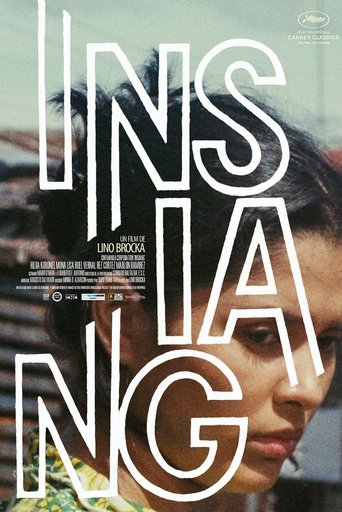

One of my most significant discoveries during my journey through 1975 films was Manila in the Claws of Light, where Lino Brocka masterfully captured the struggles of life in the Philippines through the journey of a young man fighting against a society that offers him no favors. In 1976, Brocka returned with Insiang, exploring similar themes and once again delivering impressive results. This time, he shifts his focus to a young woman living with her abusive mother, who must find her own strength to carve a way out of her oppressive life.
Once again, Brocka demonstrates his mastery in depicting life in the Philippines. Filmed entirely on location in a slum, the film vividly captures the homes and ways of living of the people who inhabit this world. Without slowing the pace or indulging in unnecessary moments, Brocka immerses us in this environment, ensuring we understand the social and emotional realities of his characters. The setting feels authentic and alive, drawing us deeply into Insiang’s world.
At the heart of the film is Insiang, played brilliantly by Hilda Koronel. She embodies the kind of strong woman that cinema, especially Hollywood, often struggles to portray correctly, even nearly 50 years later. Insiang’s refusal of a man’s help in a critical moment is a defining act, not driven by disdain for men but by her belief that it’s a personal battle she must fight herself. Koronel’s nuanced performance captures the character’s transformation, portraying her tragedy and resilience with depth and authenticity.
Equally noteworthy is Mona Lisa’s chilling portrayal of Insiang’s abusive mother. The script paints her as deeply flawed and antagonistic, yet Mona Lisa adds layers of insecurity and emotional vulnerability to her performance. While her actions are unforgivable, her portrayal provides insight into the roots of her cruelty, making her a complex and haunting figure rather than a one-dimensional villain.
The film occasionally leans into melodrama, with moments that approach soap-opera territory and a score that is as pretty as it is repetitive. However, the actors’ grounded performances ensure the story remains compelling and emotionally resonant. Compared to Manila in the Claws of Light, Insiang feels more personal, focusing on one woman’s struggle rather than presenting a broader societal critique. While Manila captured a sense of collective suffering, Insiang narrows its lens to one individual’s tragedy, which slightly diminishes the societal scope but enhances its emotional intimacy.
The narrative builds to a highly satisfying conclusion, culminating in a powerful final scene that lingers long after the credits roll. Great cinema doesn’t just tell a story, it immerses us in a world. For 90 minutes, Insiang transported me to the slums of Manila, offering a raw and poignant glimpse into the struggles and resilience of its protagonist.
- 1Rocky
- 2Taxi Driver
- 3Assault on Precinct 13
- 4Kings of the Road
- 5All the President's Men
- 13Insiang#13 of 51
- Where to watch
- Not available for streaming
- Where to watch
- Not available for streaming
 Play trailer


- Original title
- Insiang
- Director
- Lino Brocka
- Genre
- Drama
- Cast
- Hilda Koronel, Mona Lisa, Ruel Vernal, Rez Cortez, Marlon Ramirez, Nina Lorenzo, Mely Mallari, Carpi Asturias
- Screenwriter
- Lamberto E. Antonio, Mario O'Hara
- Composer
- Minda D. Azarcon
- Cinematography
- Conrado Baltazar
- Editor
- Augusto Salvador
- Country

- Language
- Tagalog