

Over the years, we’ve seen many musicians transition to film, delivering performances that are not only great but feel intrinsically tied to who they are as artists. The most fascinating cases are when they bring elements of their persona to a role, not merely playing themselves, but enhancing the character and the film as a whole. We’ve seen this from Lady Gaga, Liza Minnelli, Barbra Streisand, Ariana Grande, and others. Among these artists who have made the leap seamlessly is David Bowie.
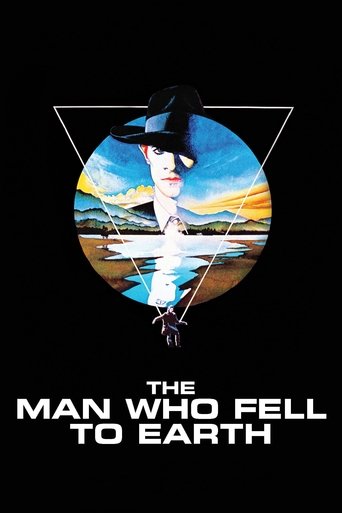
Bowie’s filmography is surprisingly expansive, spanning everything from playing a singing sorcerer in Labyrinth to Pontius Pilate in The Last Temptation of Christ to Nikola Tesla in The Prestige. Each of these roles reflects a different facet of Bowie’s persona, but in his film debut, The Man Who Fell to Earth, it feels as if the movie itself carries a piece of his soul. His naturally androgynous, otherworldly presence makes him a perfect fit for Thomas Jerome Newton, an alien who arrives on Earth hoping to save his dying planet. But Bowie isn’t just showing up and coasting on his image, his performance is deeply vulnerable, melancholic, and oddly human, making the film’s themes resonate even when Nicolas Roeg’s deliberately fragmented storytelling turns the experience into something frustratingly disorienting.
At its core, The Man Who Fell to Earth is a film about an outsider trying to navigate a world that is fundamentally alien to him. Newton arrives with a mission, to bring water back to his home planet, but he’s quickly swallowed by human vices. Wealth, greed, corruption, addiction, doomed love… these forces derail him to the point where he ultimately forgets his own purpose. It’s a devastating arc, and Bowie plays it with an almost ghostly detachment, his emotions barely surfacing except in rare moments of desperation.
Roeg’s signature non-linear storytelling amplifies this sense of displacement, frequently jumping across time and narrative threads without warning. While this fractured structure enhances the film’s dreamlike quality, it can also be alienating. Certain subplots and secondary characters, such as those involving corporate espionage or extended diversions into the lives of people around Newton, feel like distractions rather than essential pieces of the story. It’s easy to see why the film frustrates some viewers, it asks for patience and doesn’t always reward it in conventional ways.
But if you’re willing to embrace the film’s hypnotic, sometimes disjointed rhythm, there’s so much to appreciate. The sense of unease is expertly captured, particularly in how the film presents Newton’s alien nature. His true form, briefly revealed in hauntingly surreal moments, is both striking and unsettling, reinforcing his detachment from humanity.
There’s also a surprising amount of dark humor woven into the film, particularly in how Newton engages with human customs. His awkwardness in social situations, his fascination with television, these moments add a layer of tragic absurdity to his experience. But the standout moment is a botched murder attempt involving a broken window, a scene that spirals so unexpectedly into comedy that it becomes one of the film’s most bizarrely entertaining highlights.
Even when the film leans into its more humorous or absurd elements, it remains elusive and challenging. This isn’t an accessible sci-fi film, you won’t find grand explanations or conventional resolutions, but for those willing to surrender to its hypnotic, enigmatic style, The Man Who Fell to Earth offers plenty to unpack. Its themes are clearly stated, and even when the film meanders or loses its way, Bowie’s presence anchors it, making it one of the most unique and haunting entries in the genre.
- 1Rocky
- 2Taxi Driver
- 3Assault on Precinct 13
- 4Kings of the Road
- 5All the President's Men
- 21The Man Who Fell to Earth#21 of 51
- Where to watch
- Rent or buy at Apple TV Store, YouTube, Amazon Video
- Where to watch
- Not available for streaming
 Play trailer


- Original title
- The Man Who Fell to Earth
- Director
- Nicolas Roeg
- Genre
- Science Fiction, Drama, Fantasy
- Cast
- David Bowie, Rip Torn, Candy Clark, Tony Mascia, Buck Henry, Bernie Casey, Adrienne La Russa, Claudia Jennings
- Rated
- 18A
- Screenwriter
- Paul Mayersberg
- Composer
- Stomu Yamashta, John Phillips
- Cinematography
- Anthony B. Richmond
- Editor
- Graeme Clifford
- Country
 Netherlands Antilles
- Language
- English
- Budget
- $1.5 million