
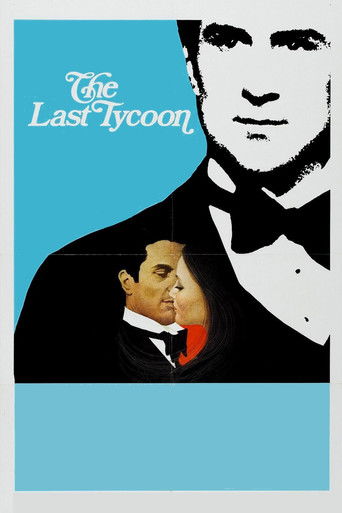

Few things can weigh a film down more than the sheer weight of expectation. The Last Tycoon had everything going for it, an adaptation of F. Scott Fitzgerald’s unfinished novel, directed by the legendary Elia Kazan (On the Waterfront and A Streetcar Named Desire), written by Harold Pinter, and starring Robert De Niro at the height of his talent. Add to that a stacked supporting cast featuring Tony Curtis, Robert Mitchum, Jack Nicholson, and Donald Pleasence, alongside powerhouse producer Sam Spiegel (Lawrence of Arabia, On the Waterfront), and you have a film that seemed destined for greatness.
For all its talent and prestige, The Last Tycoon commits the ultimate cinematic sin, being merely good. Over the years, Hollywood’s golden era has been portrayed with grandeur and intensity, from The Day of the Locust (1975) to more modern films like Babylon (2022). In contrast, The Last Tycoon approaches its subject with a cool, almost detached elegance, favoring quiet power struggles over explosive drama. The first 30 minutes take a subdued, almost overly restrained approach, far more introspective than one might expect from a story about Hollywood power players. While this might feel jarring for a film set in an industry built on spectacle, once it settles, it finds its footing where it matters most: in its central character study and the ill-fated romance that defines it.
De Niro’s performance is the film’s strongest asset. As Monroe Stahr, a brilliant yet reserved producer, he wields immense power over people’s lives without cruelty, firm but fair, a perfectionist who keeps his emotions guarded. That is, until Kathleen Moore (Ingrid Boulting), a woman who reminds him of his deceased wife, begins to break through his defenses. His growing obsession with her becomes the film’s emotional core, and De Niro crafts a figure as enigmatic as he is quietly tragic.
That said, the film could have used more energy. The pacing is often too measured, and key moments, especially the third-act confrontation with Jack Nicholson, lack the dramatic punch they need. Scenes of the movies Stahr is producing, meant as thematic parallels to his life, drag and aren’t particularly compelling. More engaging are the glimpses into Hollywood’s inner workings, the power plays, insecurities, and fleeting nature of success. Mitchum’s affair with a younger woman and Curtis’ portrayal of a fragile leading man stand out as more intriguing side stories.
The film’s most widely praised element is its production design, which earned its sole Academy Award nomination. And deservedly so, the meticulous recreation of 1930s Hollywood, with its lavish sets and backlot atmosphere, is a joy to navigate. It adds a layer of authenticity that the film occasionally lacks in its storytelling.
Ultimately, The Last Tycoon is worth watching for its premise and De Niro’s performance alone. As a portrait of a powerful yet emotionally guarded Hollywood producer navigating a changing industry, it has the makings of a gripping character study. But much like its protagonist, the film holds back when it should command attention, remaining more subdued than it needed to be.
- 1Rocky
- 2Taxi Driver
- 3Assault on Precinct 13
- 4Kings of the Road
- 5All the President's Men
- 24The Last Tycoon#24 of 51
- Where to watch
- Rent or buy at Apple TV Store, YouTube, Amazon Video
- Where to watch
- Not available for streaming


- Original title
- The Last Tycoon
- Director
- Elia Kazan
- Cast
- Robert De Niro, Tony Curtis, Robert Mitchum, Jeanne Moreau, Jack Nicholson, Donald Pleasence, Ray Milland, Dana Andrews
- Rated
- PG
- Screenwriter
- Harold Pinter
- Composer
- Maurice Jarre
- Cinematography
- Victor J. Kemper
- Editor
- Richard Marks
- Country

- Language
- English