
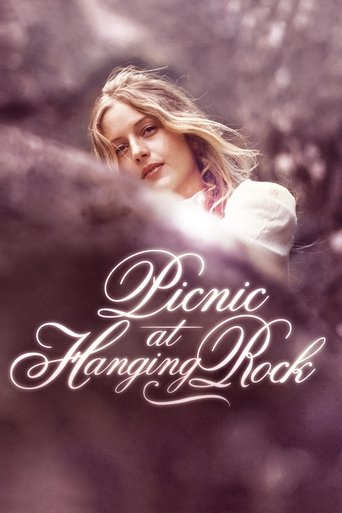
In Picnic at Hanging Rock, director Peter Weir crafts a narrative set in early 20th-century Australia, a time characterized by strict societal expectations for women and a pervasive sense of unease. Loosely based on a true story, the film follows a group of four schoolgirls from Appleyard College who mysteriously vanish during a picnic at the enigmatic Hanging Rock. As the search for the girls unfolds, the film captures the escalating paranoia and suspicion among the townspeople, revealing the haunting impact of their disappearance on those left behind. While the story hints at deeper themes of repression and the fragility of innocence, it often feels more like a collection of atmospheric scenes rather than a cohesive narrative.
Weir’s ambitious vision seeks to merge reality with a hint of the supernatural. The film’s ethereal visuals and haunting score contribute to its enigmatic quality, with the missing girls often portrayed as angelic figures in their flowing white gowns. Their soft-spoken voices add to the mystique, and the allure of their disappearance keeps viewers intrigued, yet this is contrary to Weir’s intentions. By rendering the mystery as inexplicable to the audience as it is to the remaining characters, he emphasizes the varied reactions of each person to the unsettling events. However, the narrative adopts a dreamlike quality, shifting among characters and sometimes glossing over crucial moments leading up to the crisis.
While Picnic at Hanging Rock has engaging elements, particularly in the quest of friends Michael Fitzhubert and Albert Crundell to find the missing girls, the most compelling moments stem from the stern headmistress, Mrs. Appleyard, played masterfully by Rachel Roberts. Each character copes with the tragedy in their own way, and Mrs. Appleyard’s harsh treatment of the vulnerable orphan, Sara, reveals her own insecurities and control issues. Roberts captures the headmistress’s guilt and desperation, especially in scenes where Mrs. Appleyard practices her scathing lines, giving insight into her internal turmoil. Even at her most merciless, Roberts’ nuanced expressions hint at deeper vulnerability.
Despite these intriguing explorations, the lack of sense of urgency surrounding the girls’ disappearance does the film a disservice. The gravity of the situation seems slow to resonate, and some may argue that it never truly does. It’s not that Weir needed to reveal what happened, but rather that the characters themselves seem slow to react; only later are we told about parents’ concern and their beginning to pull their children from the school. The film would have benefited from treating the disappearance with more immediacy. While Picnic at Hanging Rock has earned its status as a classic in Australian cinema, this distant approach to the mystery, along with its unhurried pace, may leave some viewers wanting more.
- 1One Flew Over the Cuckoo's Nest
- 2Dersu Uzala
- 3Jaws
- 4Nashville
- 5Manila in the Claws of Light
- 28Picnic at Hanging Rock#28 of 51
- Where to watch
 Criterion Channel
- Where to watch
- Not available for streaming
 Play trailer


- Original title
- Picnic at Hanging Rock
- Director
- Peter Weir
- Cast
- Rachel Roberts, Vivean Gray, Helen Morse, Kirsty Child, Tony Llewellyn-Jones, Jacki Weaver, Anne-Louise Lambert, Karen Robson
- Rated
- PG
- Screenwriter
- Cliff Green
- Composer
- Bruce Smeaton
- Cinematography
- Russell Boyd
- Editor
- Max Lemon
- Country

- Language
- English
- Budget
- 460000
- Box office
- $5.125 million