
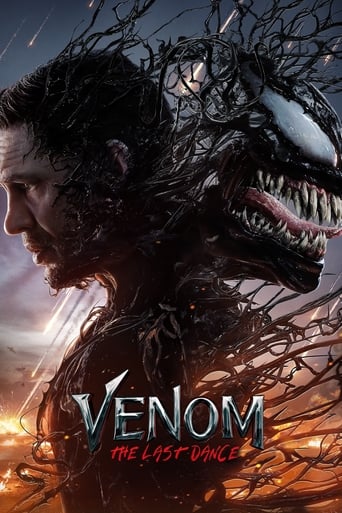
The third installment in Sony’s Venom series, Venom: The Last Dance, marks the supposed finale of Eddie Brock’s journey with his quirky symbiotic partner. Directed by first-time director Kelly Marcel, who co-wrote the previous two films, this entry continues to explore the comically dysfunctional relationship between Eddie and Venom. It builds on the lightheartedness that defined the second film, delivering a breezy, funny, and often heartwarming experience that surprisingly evokes a sense of sadness about the franchise’s conclusion, especially considering my strong dislike for the first film.
Quickly resolving the cliffhanger from the previous installment and recapping the scene from Spider-Man: No Way Home, The Last Dance is accessible enough that you needn’t rewatch its predecessors. The film kicks off with Eddie hiding out in Mexico, where he’s become a prime suspect in a high-profile murder case. As his name makes headlines, he and Venom race to New York City to clear his name, only to find themselves pursued by a new, mysterious threat: a creature called a Xenophage, driven by a sinister agenda tied to Venom’s origins. Their journey across the desert reveals the cosmic significance of their bond as they learn that the Xenophage is after a “Codex” within Eddie, a powerful key that could unleash an ancient evil known as Knull. Meanwhile, a government operation called Imperium, led by Rex Strickland (Chiwetel Ejiofor), is tracking symbiotes at Area 51.
The journey to New York transforms the film into an easygoing road trip adventure. Instead of focusing on battles with generic monsters, reserved for the last 20 minutes, the film maintains a lighthearted tone, keeping it breezy and enjoyable. Tom Hardy is once again charismatic as Eddie, even if it’s hard to believe he was once a reporter. The chemistry between Eddie and Venom remains a highlight. The film features entertaining scenes, including a memorable sing-along to “Space Odyssey” with a hippie family, a fun entry into a Las Vegas casino, and a lively dance number set to ABBA’s “Dancing Queen.” These moments, along with Rhys Ifans’s standout performance, make the film worthwhile.
However, the antagonists leave much to be desired. The CGI monsters are ugly and generic, and viewers often find themselves waiting for the government scenes led by Strickland to wrap up. The biggest letdown is the uninspired main villain portrayed by Andy Serkis; his character design feels generic and calls to mind Morbius. The film fails to clarify why we should fear him or what the stakes are if he were to succeed, leaving us indifferent to the outcome, not that we ever really believe his plan could succeed. Aside from a brief moment when Venom possesses various animals, the action scenes lack creativity, leaving viewers to endure yet another uninspired CGI showdown. The government side characters also feel excessive, with both Juno Temple and Clark Backo not making the significant impact they should.
What The Last Dance has over its predecessor is a subtle yet effective sense of melancholy, hinting that one of the two main characters might not make it out alive. While this emotional depth doesn’t significantly elevate the franchise, it adds a touch of weight to the narrative. The fact that prior films aren’t necessary to follow the movie, and that characters like Michelle Williams’ Anne are absent with no impact, suggests the franchise may not have much longevity. Still, a poignant reflection on the Statue of Liberty evokes a bittersweet feeling about this chapter coming to a close, at least for now.
- 1Dune: Part Two
- 2Conclave
- 3Better Man
- 4The Substance
- 5Challengers
- 64Venom: The Last Dance#64 of 110
- Where to watch
 Netflix
- Where to watch
 Prime Video
 Play trailer


- Original title
- Venom: The Last Dance
- Director
- Kelly Marcel
- Genre
- Science Fiction, Action, Adventure
- Cast
- Tom Hardy, Chiwetel Ejiofor, Juno Temple, Rhys Ifans, Stephen Graham, Peggy Lu, Clark Backo, Alanna Ubach
- Rated
- PG
- Screenwriter
- Kelly Marcel, Tom Hardy
- Composer
- Dan Deacon
- Cinematography
- Fabian Wagner
- Editor
- Mark Sanger
- Country

- Language
- English
- Budget
- $120 million
- Box office
- $478.938 million