
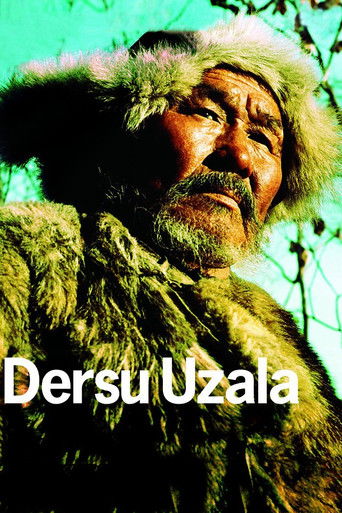
The Oscars really got it right when they awarded Dersu Uzala the Best Foreign Film of 1975. Directed by the legendary Akira Kurosawa, this film is his first and only non-Japanese production, and it couldn’t have come at a better time. In the early ’70s, Kurosawa was struggling. Despite being behind some of Japan’s most iconic films like Seven Samurai, Rashomon, and Yojimbo, his career hit a rough patch as Japanese cinema started shifting in a different direction. Just when he was close to retiring, Mosfilm, a major Soviet studio, invited him to adapt the memoirs of Russian explorer Vladimir Arsenyev. The story’s themes, nature, human connection, and mutual respect, fit right into Kurosawa’s vision. This chance to work on a large-scale project gave him a new perspective and a fresh creative spark. Dersu Uzala would later remain Kurosawa’s only non-Japanese film.
There’s something poetic about Kurosawa’s own story running parallel with the film’s title character. Dersu Uzalaintroduces us to Dersu, a sensitive, insightful hunter whose deep knowledge of the Siberian wilderness is matched only by his respect for it. He’s a quiet figure, but he carries profound wisdom. Yet, the movie focuses on Captain Arsenyev, leading a group of Russian explorers through the Siberian wilderness, who encounters Uzala. Despite the differences between the Captain and Dersu’s lifestyles, they have to work together to survive in the wild, and they form a bond that eventually evolves into a genuine, heartfelt friendship. Dersu’s worldview, where animals, rivers, and trees are just as important as humans, stands in sharp contrast to Arsenyev’s more logical, ordered approach. And yet, both men end up changing each other’s lives.
Unlike films like Avatar, Dances with Wolves, or The Last Samurai, where a Westerner gets enamored with an “exotic” culture, Dersu Uzala takes a more balanced route. It respects the wisdom Dersu brings to the table without casting Arsenyev as some “unenlightened” outsider. Their friendship is a two-way street; Dersu teaches Arsenyev about survival and the rhythms of the natural world, while Arsenyev’s support, especially as Dersu ages, adds depth and warmth to their bond. Maxim Munzuk’s performance as Dersu deserves a lot of praise; he brings sensibility, vunerability and strength that makes Dersu as iconic as Mr. Miyagi.
There are scenes in this film that’ll stick with you, like the moment Dersu and Arsenyev huddle together for warmth in the freezing cold. The movie offers adventure too, with thrilling sequences like the river rafting scene. The film does lean into quieter, slower moments that might test some viewers used to a faster pace, but these moments invite us to reflect on the beauty of the world and the characters’ lives. Kurosawa’s pacing reflects the natural rhythm of life, urging us to savor small gestures and moments of connection.
Filming in the Siberian wilderness was no easy task. Kurosawa and his team faced harsh, remote conditions that added an incredible level of authenticity to the story but also pushed everyone to their limits. The two-year shoot resulted in stunning cinematography that fully captures Siberia’s untamed beauty. The long takes, wide shots, and 70mm film let the landscape speak for itself, making humans look small and vulnerable against the backdrop of nature. The cold almost seeps out of the screen.
In Dersu Uzala, Kurosawa is in a quieter, more contemplative mode. He leaves out the action-packed style of his samurai films and instead focuses on mood and atmosphere. The soundtrack is minimal, and the editing is subtle, allowing the interactions and landscapes to guide the narrative. Siberia becomes its own character, showcasing both the beauty and the unforgiving force of nature.
In the end, Dersu Uzala offers a meditation on our relationship with the natural world and the relentless march of modernity. But its focus is showing how the best bonds are built by embracing each other’s humanity, regardless of cultural divides. This film brought Kurosawa’s career back to life, leading to masterpieces like Kagemusha and Ran. But Dersu Uzala remains special, a cross-cultural triumph and a timeless reminder of the values that connect us across time and place.
Dersu Uzala has had limited Blu-ray releases in certain countries, and it’s time for Criterion to ensure this cinematic gem is available to a wider audience.
- 1One Flew Over the Cuckoo's Nest
- 2Dersu Uzala#2 of 51
- 3Jaws
- 4Nashville
- 5Manila in the Claws of Light
- Where to watch
 Criterion Channel
- Where to watch
- Not available for streaming
 Play trailer


- Original title
- Дерсу Узала
- Director
- Akira Kurosawa
- Cast
- Yuriy Solomin, Maksim Munzuk, Mikhail Bychkov, B. Khorulev, Vladimir Kremena, Aleksandr Pyatkov, Svetlana Danilchenko, Dmitri Korshikov
- Rated
- G
- Screenwriter
- Yuriy Nagibin, Akira Kurosawa
- Composer
- Isaac Schwarts
- Cinematography
- Fyodor Dobronravov, Asakazu Nakai, Yuri Gantman
- Editor
- Valentina Stepanova
- Country


- Language
- Russian
- Budget
- $4 million