
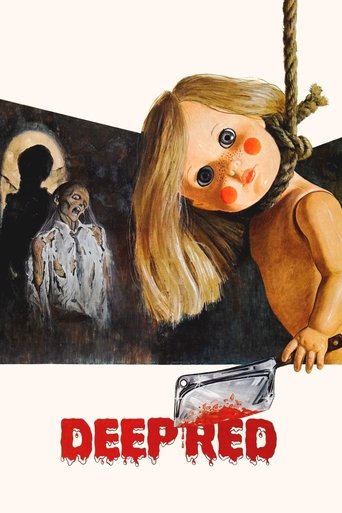
Following his earlier successes with The Bird with the Crystal Plumage (1970) and Four Flies on Grey Velvet (1971), Dario Argento solidified his reputation in 1975 with Deep Red, a film that bridged his grounded thrillers and the surreal horror of later works like Suspiria (1977) and Inferno (1980). Blending the suspense of his early films with the stylistic surrealism that would define his later career, Deep Red became both a commercial hit and a cult classic. Its influence on directors like John Carpenter and Wes Craven is undeniable, with its impact still visible in iconic slasher films of the late ’70s and early ’80s, including Halloween, Friday the 13th, and The Texas Chainsaw Massacre. For those unfamiliar with Argento, Deep Red might be best described as an artful precursor to these slashers, with a Hitchcock-inspired protagonist and plot structure, though it maintains a focus on an everyman lead rather than the teenage characters that would dominate the genre later.
The film begins with a parapsychology lecture, where psychic Helga Ulmann senses a killer’s presence in the audience, only to be murdered in her apartment shortly afterward. Jazz pianist Marcus Daly becomes an unwitting witness to her murder and partners with the persistent reporter Gianna Brezzi to uncover the killer. Their investigation leads to eerie discoveries, a mysterious child, an unsettling children’s song, and haunting dolls, guiding us through increasingly dreamlike sequences that intersperse brutal, graphic murders with chilling atmosphere.
Argento’s direction is sophisticated, characterized by attention-grabbing camera movements, vivid colors (especially red and blue), and meticulously framed shots that amplify each horror sequence. Nightmare-like scenes and disturbing doll imagery create a deeply unsettling atmosphere, while the intense, memorable score adds another chilling layer. Argento succeeds in crafting a truly disturbing experience.
However, while the direction is flawless, the script lacks the same refinement, leaving the impression that the film’s visual elements received greater attention. The plot effectively sets up the murders but meanders in the second act, which, coupled with pacing issues, risks losing the viewer’s attention. A significant factor in this is that the characters aren’t very compelling. When together their chemistry is enjoyable (and there’s a clever joke involving a car seat and lock), but they struggle to stand on their own. Marcus’s motivation for solving the crime becomes less convincing as the story progresses. Although Gianna brings energy and an interesting dynamic to the film, her pushiness can feel overplayed at times.
The final reveal is well-conceived but somewhat predictable, as the killer (slight spoiler) is the only remaining character without a clear purpose. Still, the twist involving a hidden room and a painting is satisfying, and the ending avoids the superhuman killer trope that would later define the slasher genre.
Ultimately, Deep Red is worth watching for its visual artistry alone. Watching such an influential film can often feel like observing the roots of later, perhaps more polished, genre films. While Deep Red may not match the suspense of Hitchcock’s best thrillers or the raw intensity of top-tier slashers, its distinctive style and memorable scenes make it a film well worth exploring.
- 1One Flew Over the Cuckoo's Nest
- 2Dersu Uzala
- 3Jaws
- 4Nashville
- 5Manila in the Claws of Light
- 12Deep Red#12 of 51
- Where to watch
 ShudderArrow
- Where to watch
- Not available for streaming
 Play trailer


- Original title
- Profondo rosso
- Director
- Dario Argento
- Cast
- David Hemmings, Daria Nicolodi, Gabriele Lavia, Macha Méril, Eros Pagni, Giuliana Calandra, Piero Mazzinghi, Glauco Mauri
- Rated
- R
- Screenwriter
- Dario Argento, Bernardino Zapponi
- Composer
- Claudio Simonetti, Giorgio Gaslini
- Cinematography
- Luigi Kuveiller
- Editor
- Franco Fraticelli
- Country

- Language
- Italian
- Box office
- $2.9 million