
OVERVIEW
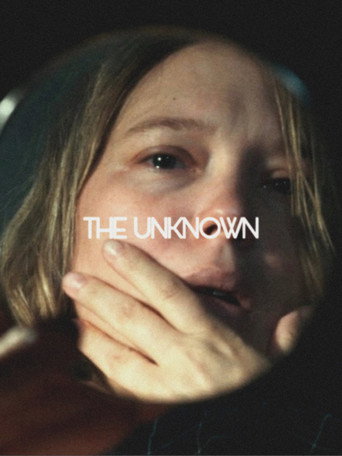
In a premise that mixes It Follows and Under the Skin, The Unknown has Léa Seydoux playing a mysterious entity that lures a reclusive photographer in his late thirties, David Zimmerman (Niels Schneider), into sex. The two have a spontaneous encounter at a costume party, and when he wakes up, he is inhabiting her body. He searches for his old body, and when he finds it, realises that a young teenager is living inside it now, lured the same way he was. It is a psychological drama that uses the body swap premise to explore both the suffocation of living inside a stranger’s body and the possibility of making peace with it.
BACKGROUND
The Unknown is Arthur Harari’s third feature, and his first time in Cannes competition as a director. It follows his Oscar-winning screenplay for Anatomy of a Fall, co-written with his partner Justine Triet, and it is adapted from a graphic novel he wrote with his brother Lucas in 2024. A third Harari brother, Tom, shoots the film. Inside the Cannes selection committee, the title sparked more debate than anything else in the 2026 lineup, and at the April press conference, festival head Thierry Frémaux pre-announced the controversy himself by comparing the film to L’Avventura, a 1960 Antonioni film that famously divided audiences at the festival, with walkouts and boos at the premiere before it went on to become a landmark of modern cinema. The Unknown‘s premiere did not generate the same passion, but it nonetheless split critics and festivalgoers with its nebulous, deliberately opaque shape.

THE REVIEW
The toolbox Harari is playing with here is filled with immense potential. For years, the body-swap subgenre has had characters live another person’s life mostly for comedic beats, and most of the time, if not always, the conclusion landed on the same note: their old lives were actually fantastic. That setup has generated a lot of laughs, but the premise’s dramatic potential has rarely been fully explored. Who has never looked at themselves in the mirror and wondered, is that really me? How well does our physical appearance match the person we have built inside? Harari uses the swap to ask what actually makes us ourselves. Is it the body we inhabit, the people we know and the way they know us, or the layers of memory and prejudice that accumulate over the years?
David is not the most obvious protagonist for this premise, but he turns out to be a fascinating one. Introverted, withdrawn, and looking like a mixture of John Cazale in Dog Day Afternoon and Robert Pattinson, he already seems uncomfortable in his own body before the transformation happens. There is an early scene where he finds himself painted on a wall, and the image makes him recoil in self-disgust. After the swap, he meanders through a range of emotions while forced to inhabit another person’s body. He experiences what it is to be a woman, and a very attractive one at that, and to live with memories that are not his own, including those that surface when he visits the apartment where Eva used to live.
His development is one of gradual acceptance, which stands in direct contrast to that of the teenage girl who has ended up living in his body. Anguished about losing all the pleasures of a teenage girl spoiled by her father, and now stuck in a body she finds far less attractive, she is much more determined to undo what happened. She even suggests that the two of them have sex to see if it might trigger another switch, which forces David into the genuinely unsettling situation of having to have intercourse with his own former body. Along the journey, the two also find, through a Reddit thread of all places, another woman who seems to have gone through the same experience, and who, after years of being told she was sick, has come to find a kind of peace inside her new condition.
For all the horror in its setup, The Unknown is not really a scary film. The dread is there, but it is muted, sitting under the surface rather than reaching for the throat. Most of what the film has to say arrives through performance and silence, with the dialogue kept to a minimum throughout. The film is purposely open, sometimes deliberately vague, and the meanings live in posture and gesture rather than in what the characters actually say to each other.
Much of it works thanks to the intricate work of Léa Seydoux, who gives perhaps the strongest performance at Cannes 2026 and arguably the best of her career, at least on par with her fascinating work in The Beast. She breathes and walks more heavily to sell the physical reality of a man inside a woman’s body, and even more impressively navigates as her character journeys from fear and confusion to a slow acceptance of the new reality. A truly fascinating performance.
The film invites a lot of interpretation, from its trans allegory to the way sex is still portrayed and policed in modern society, hinting at many readings without locking into any of them. The most effective reading might also be the simplest and most accessible. Who, after all, is completely satisfied with the body they inhabit, or, more honestly, with the person they actually are?
FINAL THOUGHTS
The Unknown is not a film for everyone. It asks for the kind of patience Jonathan Glazer’s Under the Skin demanded, and gives back even less in terms of answers and conclusions than that film did. What looks like vagueness from a distance turns out to be the source of the film’s depth. For those willing to engage with its numerous discussions, the reward is one of the strangest and most genuinely unsettling films to come out of Cannes this year, and a Seydoux performance for the books.
Still courtesy of Elevation Pictures
- 1Hadestown: The Musical
- 2Tuner
- 3Minotaur
- 4The Weight
- 5Wicker
- 9The Unknown#9 of 208
- 1Minotaur
- 2Wild Horse Nine
- 3The Man I Love
- 4The Unknown#4 of 52
- 5La Gradiva
- 1Minotaur
- 2Hope
- 3The Man I Love
- 4The Unknown#4 of 34
- 5La Gradiva
- Where to watch
- Coming soon
- Where to watch
- Coming soon
 Play trailer


- Original title
- L’inconnue
- Director
- Arthur Harari
- Cast
- Léa Seydoux, Niels Schneider, Valérie Dréville, Lilith Grasmug, Radu Jude, Shanti Masud, Victoire du Bois, Jonathan Turnbull
- Screenwriter
- Arthur Harari, Vincent Poymiro, Lucas Harari
- Composer
- Andrea Poggio
- Cinematography
- Tom Harari
- Editor
- Laurent Sénéchal
- Country

- Language
- French
- Distributor (CA)
- Elevation Pictures