
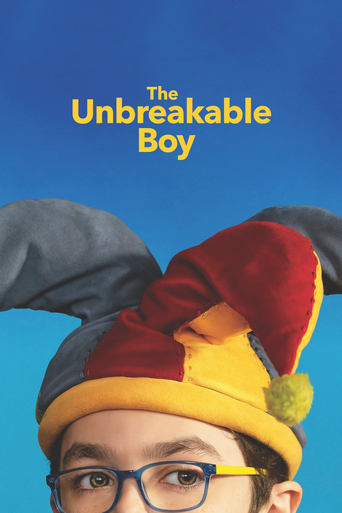
The Unbreakable Boy is an emotional story about a young father, Scott, who learns the hard way about life’s priorities and putting family first. He starts as a successful independent businessman, meets Teresa (Meghann Fahy), and before he knows it, he’s married with kids. The change is overwhelming, especially since his eldest son, Austin, has autism and brittle bone disease, requiring far more care than Scott is willing to commit. It’s a story of redemption, responsibility, and the challenges of raising a neurodiverse child.
The film is directed by Jon Gunn, an expert in faith-based films (Ordinary Angels being his most recent, well-received effort). These types of films often lean into corny moments and clichéd plot points, but Gunn has a way of turning sentimentality into genuine emotion. The result is a surprisingly grounded and effective film, despite plenty working against it, Zachary Levi’s career slump, a syrupy trailer that spoils too much, and even some odd script choices, including an imaginary character. To Gunn’s credit, he never forces easy tears but still manages to earn them.
Adapted from the memoir The Unbreakable Boy: A Father’s Fear, a Son’s Courage, and a Story of Unconditional Love, the film shifts the book’s perspective to focus almost entirely on Scott. The story is straightforward and familiar, with no major surprises. Scott starts off professionally successful, but as he struggles to share his life with someone, before the kids are even born, he bottles up his emotions and turns to alcohol, escaping through conversations with his imaginary friend. His drinking worsens after having children, costing him his job and sending him on a downward spiral.
But even at its most corny and clichéd, like a metaphor of a broken mug being glued back together, Gunn makes these moments feel sincere.
Zachary Levi delivers one of his stronger performances, playing an unlikable man who repeatedly lets his ego and selfish decisions take priority over his family. The film doesn’t soften Scott’s flaws, and it’s refreshing to see Levi fully commit to the role without concern for likability. Meghann Fahy, as Scott’s wife Teresa, is also given room to be flawed, it’s refreshing that she’s not just a simple voice of reason. She makes her own mistakes, ones that don’t necessarily help Scott with his struggles. Their first encounter is charming, and the warmth of that moment carries through the film, making us root for them to work through their differences.
Now, the film is an effective character study of the father (and to a lesser extent, the mother and younger son), but what about the Unbreakable Boy in the title? Surely Austin goes through an arc that explains why he is “unbreakable,” right? Well, not really. Despite his presence, Austin never quite escapes feeling like a device for other characters’ growth rather than having a fully realized arc of his own. Though he narrates the film with relentless optimism, most of what he says serves to reflect on others rather than propel his own story. A more rewarding and challenging film would have centered Austin’s perspective more directly instead of using him as a catalyst for his parents, and even his younger brother, to learn life lessons. The film briefly attempts to depict how an autistic child sees the world, like a moment imagining a flight that’s possibly the closest we’ll ever see of Levi reprising his Shazam! role after the failure of that series.
Also, for those expecting a faith-based movie, there is actually little here about it. Yes, the themes of reconciliation align with the Christian perspective on marriage, and the characters go to church, but that’s not what actually drives the changes.
That said, The Unbreakable Boy isn’t a deep exploration of autism, it’s more of a story about the struggles of parenthood, which happens to include an autistic child. Approached from that perspective, it gets the emotional beats right without feeling overly saccharine, making it work for what it is.
- 1. Sinners
- 2. Shepherds (Bergers)
- 3. The Ballad of Wallis Island
- 4. Kiss of the Spider Woman
- 5. One of Them Days
- 41. The Unbreakable Boy
- Where to watch

 Crave
Crave
 Prime Video
 Play trailer


- Original title
- The Unbreakable Boy
- Director
- Jon Gunn
- Cast
- Zachary Levi, Meghann Fahy, Jacob Laval, Drew Powell, Gavin Warren, Patricia Heaton, Todd Terry, Liza Marie Gonzalez
- Rated
- PG
- Screenwriter
- Jon Gunn
- Composer
- Pancho Burgos-Goizueta
- Cinematography
- Kristopher S. Kimlin
- Editor
- Parker Adams
- Country

- Language
- English
- Budget
- $6 million
- Box office
- $7.511 million
- Streaming (CA)
- Crave
- Buy / rent (CA)
- Apple TV Store, Google Play Movies, YouTube, Amazon Video