
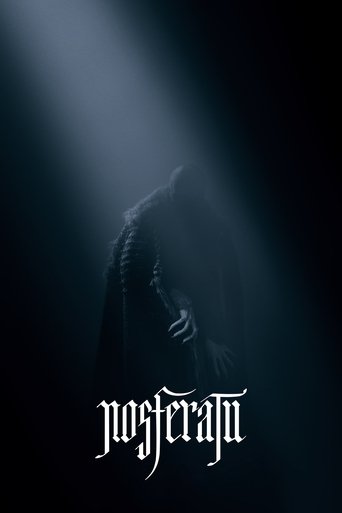
In an era where high-concept horror dominates the genre with its intricate narratives and psychological depth, a serious, high-production Gothic adaptation feels almost like a relic from another time. Robert Eggers’ Nosferatu arrives as a rare offering, reviving the haunting elegance and atmospheric dread of a genre often overshadowed by spectacle. Eggers’ fourth film is as respectful to the source material as one could hope for, solidifying his place as an internet-favorite director. F.W. Murnau’s Nosferatu, a silent masterpiece and adaptation of Bram Stoker’s Dracula, is one of cinema’s most influential works. It set a template for cinematic vampires and employed groundbreaking use of shadows and techniques like stop-motion effects to make Orlok’s movements appear supernatural, innovations that even influenced Alfred Hitchcock. Eggers’ deep connection to the original, first explored when he directed a stage adaptation of the film as a teenager, is visible on screen. The mansion, roads, city, the costumes, and even the 5,000 real rats used on set are rendered with meticulous care, showcasing Eggers’ commitment to authenticity and atmosphere.
For a genre that hasn’t seen a standout entry since the early 2000s (although Guillermo del Toro’s work evokes similar feelings), Eggers’ Nosferatu delivers a dark, atmospheric experience. Its memorable imagery and emphasis on tension over jump scares make it a refreshing return to form. The scares lie in lingering dread and the haunting stillness of its settings, rather than in shock or gore. Yet, despite the craftsmanship, the film struggles to fully engage. While individual shots and moments transcend, the overall experience can feel calculated, as though Eggers is too focused on precision rather than emotional instinct. This lack of instinct results in moments where the film struggles to hold attention, making it difficult to connect emotionally with the characters or believe in the central romance and its stakes.
This detachment is particularly evident in the performances. Willem Dafoe brings gravitas and a commanding presence, perfectly embodying the Gothic tone the film needs. By contrast, the younger actors, though technically proficient, struggle to fully inhabit their characters, leaving their work feeling more like rehearsed performances than lived-in roles. Aaron Taylor-Johnson’s portrayal is the most notable example, with his character’s yelling and crying coming across as shallow and passionless, failing to convey genuine emotional depth. Nicholas Hoult and Lily-Rose Depp face similar challenges, albeit to a lesser degree, as their performances lack the naturalism needed to truly sell their characters’ emotions. Bill Skarsgård, despite impressive makeup work, also falls short as Count Orlok. His youth and faintly recognizable features diminish the menace required for the role. Even with sound effects enhancing his voice, he lacks the commanding, ominous presence of actors like Gary Oldman or Dafoe. These performance shortcomings make it difficult to fear for the characters or invest in their struggles, leaving key moments devoid of emotional impact.
The score, while functional, is one of the key factors holding the film back from greatness. This is the kind of movie that needed a truly unforgettable musical theme, something bold and haunting that stays with you long after the credits roll. Instead, the music simply complements the eerie atmosphere without ever stepping into the spotlight. A classic, larger-than-life score could have transformed the film, adding depth to its key moments and bridging the emotional gaps left by the performances. Sadly, this opportunity is missed. Combined with a slightly indulgent runtime, particularly in the slower-paced midsection, these shortcomings leave the film feeling distant and stretched. Cutting 20 minutes of the less dynamic scenes would have allowed for a more focused and impactful narrative.
While the film’s core relationships and emotional stakes feel underdeveloped, Nosferatu deserves recognition for its exceptional production design, cinematography, and makeup. The sets feel remarkably real and lived-in, with the mansion itself becoming a character in the first act, fascinating and integral to the film’s haunting atmosphere. The cinematography further enhances this tension, delivering many visually stunning and chill-inducing shots that make the experience unforgettable. Eggers’ use of practical effects, particularly for the blood, adds another layer of authenticity, grounding the film in a tactile reality that makes the horror more visceral. The inclusion of 5,000 real rats underscores Eggers’ commitment to practical effects, enhancing the film’s eerie and authentic feel. However, these details alone cannot compensate for the lack of emotional resonance. Are the main couple truly in love? Is Orlok (spoiler alert) so entranced by the main girl that he’d risk everything for her? These questions should be embedded in the subtext but remain unconvincing.
Eggers’ Nosferatu is a very good film, but it stops short of being a masterpiece. It’s worth watching, especially for fans of Gothic horror, but it lacks the enduring magic of the best of its genre. For those seeking a richer emotional experience, Coppola’s 1992 Dracula remains a benchmark.
- 1Dune: Part Two
- 2Conclave
- 3Better Man
- 4The Substance
- 5Challengers
- 34Nosferatu#34 of 110
- Where to watch
 Prime Video
- Where to watch
 Netflix
 Play trailer


- Original title
- Nosferatu
- Director
- Robert Eggers
- Cast
- Lily-Rose Depp, Nicholas Hoult, Bill Skarsgård, Aaron Taylor-Johnson, Willem Dafoe, Emma Corrin, Ralph Ineson, Simon McBurney
- Rated
- 14A
- Screenwriter
- Adam Pescott, Henrik Galeen, Robert Eggers
- Composer
- Robin Carolan
- Cinematography
- Jarin Blaschke
- Editor
- Louise Ford
- Country

- Language
- English
- Budget
- $50 million
- Box office
- $181.806 million