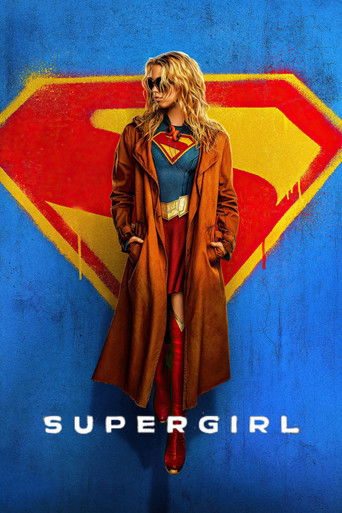
OVERVIEW
Supergirl has the classic western setup of a grieving young innocent who recruits a reluctant, whisky-soaked savior with a heart of gold and drags her across hostile country toward the people who destroyed her family. The difference is that instead of a gruff, dirty-looking John Wayne or Jeff Bridges, the drunken savior is young Kara (Milly Alcock), Clark’s skirt-wearing younger cousin, who drinks her days away on a planet where whisky can affect her. The innocent is Ruthye (Eve Ridley), daughter of a renowned sword-maker, who watched her family murdered by Krem of the Yellow Hills (Matthias Schoenaerts) and his band of Brigands. Together they cross the galaxy hunting that tribe, hopping through bars and spaceships, crossing paths with Jason Momoa’s Lobo. At first at odds with each other, the two slowly connect through their shared grief.
BACKGROUND
Supergirl arrives as the second film in Gunn and Safran’s rebooted DCU, the follow-up to 2025’s Superman and the studio’s next move toward a fully plotted cinematic universe. The character herself is old, created in 1959 as Superman’s Kryptonian cousin, and she has reached the screen before without much luck: a 1984 Helen Slater feature that flopped, and a six-season CW series with Melissa Benoist that found an audience but stayed in its own television corner. The film adapts Tom King and Bilquis Evely’s Supergirl: Woman of Tomorrow, an eight-issue run from 2021 to 2022, widely regarded as the definitive modern take on Kara, praised for its mature, complex portrayal of grief. Behind the camera is Craig Gillespie, of I, Tonya and Cruella, who, by his own account, took the job reluctantly and did not read the comic before building his version. The film had a troubled post-production, with more than ten test screenings, three composers in four months, and a 25-minute trim, all while tracking toward a disastrous $40 million opening against a $175 million budget.

THE REVIEW
The film is a mess. It is an inert adventure with recycled humor and an empty emotional core, despite being about two girls who lost their families. On a purely entertainment level, it has things going for it, mostly its lead actress, and its shorter runtime and smaller scope make it superior to the DCU’s overstuffed opener. But even then, its derivative nature, thrill-free action scenes, and extremely forgettable villain fail to leave much of an impression.
For all its snappy quips and trailer-ready moments, the film tries to convince you it is building a real emotional arc, yet on closer inspection, the result is a collection of ideas and plot points that don’t add up. Kara’s stake in the whole affair is that her dog has been shot with a poisoned dart, and she has 72 hours to obtain the antidote that the villain has (why he would do that instead of simply killing the poor animal is as inexplicable as most of his actions). Through flashbacks, it is hammered home that the dog reminds her of her early days, living with her parents in a small part of Krypton that survived the planet’s demise, yet the tragedy of losing everything she has known is never truly felt, and at the end of the day Kara’s whole drive comes down to caring for her childhood pet (a noble cause still, but not one that connects to the rest of the film). The comic was celebrated for how richly it explored Kara’s loss, and the film lets it evaporate.
The biggest failure is how poorly it connects to Ruthye’s arc, since it is never made clear what impact, if any, vengeance has had on Kara. She says her cousin sees the good in people while she sees the reality, but no scene ever proves it. From what the film shows, the biggest tragedy of her life came down to a miscalculation that resulted in radiation exposure, and her scenes with Superman on Earth waste any chance to explore their different views, insisting instead on now-tired childish humor. It doesn’t help that Alcock, charismatic as she is in that intriguing combination of youth and cunning that worked so well in House of the Dragon, fails to land the most emotional scenes.
Even worse is Eve Ridley’s Ruthye, whose girlboss act ends up annoying most of the time. Her first scene, and especially what led to her family’s murder, is so inept that it robs audiences of the easy connection they could have had with the character. Together, she and Kara fall into a recurring cycle: Kara tosses her off, says she will go after Krem alone, only for Ruthye to “surprisingly” appear and make the situation worse. The two get caught multiple times as they laboriously make their way from place to place.
The villain and his whole tribe are indistinguishable from one another, with a dull, unremarkable design and no compelling features whatsoever. Krem exists only to keep the plot moving. He has no philosophy, no charisma, no twisted sense of fun, no unpredictability. Once he exits a scene, there is almost nothing to remember. If he and his tribe are evil for evil’s sake, they would have to be larger-than-life, cruel, repugnant, and merciless, yet they feel like a pale imitation of the worst Mad Max goons.
Bringing some life to the picture, though still without the space he needs, is Jason Momoa’s Lobo. Momoa tries to inject energy into every second he is on screen, yet he is constantly fighting Gillespie’s direction, which films the character so flatly that it never lets him dominate the frame the way the role demands. Funnily enough, his Fast and Furious villain had far more room to let Momoa’s intensity and insanity breathe.
Surrounding all that are suspense-free action scenes, with the lone exception of Supergirl’s first show of power, the one sequence that lands with any real suspense. Everywhere else, it just comes and goes. The cinematography is dark and murky, and the score is thoroughly anonymous. This is the kind of film that would have been immensely improved by a memorable recurring theme, and it is head-scratching that Gunn, a vocal fan of John Williams’ rich, melodic Superman score, fails to see it. Instead, like the rest of the film, it blurs into the background and leaves nothing behind once it is over. The special effects are inconsistent, even more so than in Superman. The only positive technical aspect is the design of the alien creatures, some still playing by the Star Wars playbook, while others are creative and appealing.
FINAL THOUGHTS
Perhaps the faceless score, along with the film’s other major problems, is a result of the significant cut and changes made during post-production. The film feels like it is missing pieces, and for a film about grief, Supergirl spends remarkably little time letting anyone grieve. The end result is at least hardly boring, and it keeps moving as characters hop from place to place, but it is certainly derivative of Gunn’s superhero films, constantly reminding you what was fresh a few years ago. Kara gives villains the finger, countless modern needle drops play, and a general air of irrelevance keeps crashing into the deeper emotional core that the film strives so hard to have. The MCU shrugged off a forgettable Iron Man 2 and kept going, but honestly, two films in, I see no reason to invest much longer.
Still courtesy of Warner Bros. Canada
- 1Hadestown: The Musical
- 2Tuner
- 3Minotaur
- 4The Weight
- 5Wicker
- 175Supergirl#175 of 205
- Where to watch
- Rent or buy at Apple TV Store, Amazon Video
- Where to watch
 Max
Max
 Play trailer


- Original title
- Supergirl
- Director
- Craig Gillespie
- Genre
- Action, Adventure, Science Fiction
- Cast
- Milly Alcock, Eve Ridley, Matthias Schoenaerts, Jason Momoa, David Krumholtz, Emily Beecham, David Corenswet, Kadiff Kirwan
- Rated
- PG
- Screenwriter
- Ana Nogueira
- Composer
- Claudia Sarne
- Cinematography
- Rob Hardy, Jeremy Braben, Phil Arntz, James Friend
- Editor
- Tatiana S. Riegel, Fred Raskin, James Gunn
- Country

- Language
- English
- Budget
- $175 million
- Box office
- $126.367 million
- Distributor (CA)
- Warner Bros. Canada