
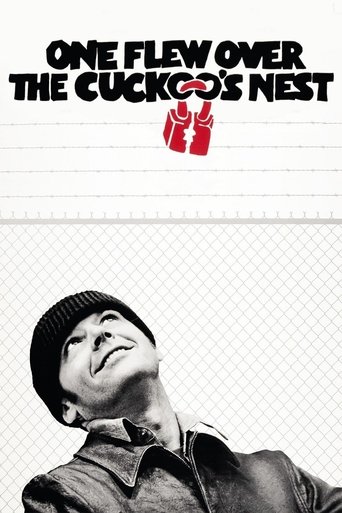
Out of all the remarkable achievements of One Flew Over the Cuckoo’s Nest, and there are many, its greatest is how it remains consistently entertaining while delivering a profound social critique. By setting its story in a mental institution, the film explores society’s mechanisms of suppression, the rules designed to silence and control, and the human cost of conformity. It’s no coincidence that the character with the most significant arc is Indigenous, or that the person who impacts the patients most positively is a criminal, while the true antagonist wields rules as a weapon to maintain power and superiority.
While Jaws is often praised as the 1975 classic for its unseen villain, One Flew Over the Cuckoo’s Nest arguably does it better with Nurse Ratched (Louise Fletcher). Despite having just over 20 minutes of screentime, her presence looms ominously throughout the film. She runs her psychiatric ward with the precision of a dictator, calm, unflappable, and utterly in control. Without ever seeing her life beyond the clinic, we grasp everything about her character: her obsessive need for order, her quiet menace, and, most disturbingly, her hunger for power. Fletcher’s Oscar-winning performance is chilling, her subtle expressions masterfully conveying an unsettling mix of confidence and cruelty.
The film pits Nurse Ratched against Randle P. McMurphy (Jack Nicholson), a loud, brash criminal attempting to escape a prison sentence by feigning mental illness. McMurphy is a rapist and pedophile, his crimes warrant no sympathy, yet he sees what the system cannot: the humanity of the patients. While Nurse Ratched enforces rigid routines in the name of discipline, McMurphy recognizes that what the men truly need is connection. His defiance isn’t rooted in altruism but in his natural resistance to authority. Yet, in challenging the system, he unintentionally becomes a catalyst for change among the men.
Nurse Ratched likely believes she’s doing what’s best. Her obsession with order and routine stems from a conviction that they lead to recovery. But beneath her methods lies something far darker: a need for control. Her actions seem less about healing and more about maintaining dominance. She rules the ward not out of compassion but because it feeds her sense of superiority. The clinic is her domain, and she won’t tolerate anything, or anyone, that threatens her authority.
The final 15 minutes of the film are devastating and cathartic, tying together its themes with precision. When Nurse Ratched coldly declares, “We must go back to our routine,” it becomes glaringly clear how broken the system is. McMurphy’s rebellion, flawed as it may be, exposes the institution’s failings. Rules and discipline don’t heal; they merely reinforce control and suppress individuality. In this moment, the audience realizes that the true harm doesn’t come from the patients’ conditions but from the system designed to keep them confined.
Amid these heavy themes, it’s easy to overlook Miloš Forman’s direction, which is nothing short of masterful. He expertly captures the ward’s oppressive claustrophobia while keeping the focus tightly on the characters. Forman strikes a perfect tonal balance, maintaining emotional depth without losing the film’s accessibility. His use of close-ups draws us into the intricacies of the performances, making every outburst, joke, and breakdown resonate. Moments of levity, like the patients’ fishing trip or their playful banter over board games, offer crucial relief, reminding us that these men are far more than their diagnoses. They are individuals with personalities, histories, and dreams that extend beyond the institution’s walls.
One Flew Over the Cuckoo’s Nest doesn’t provide easy answers, and that’s part of its brilliance. It challenges the nature of care, authority, and humanity, leaving you with much to ponder long after the credits roll. Yet, despite its weighty themes, it’s also deeply entertaining, a perfect blend of humor, heartbreak, and insight, filled with unforgettable performances and moments.
- 1One Flew Over the Cuckoo's Nest#1 of 51
- 2Dersu Uzala
- 3Jaws
- 4Nashville
- 5Manila in the Claws of Light
- Where to watch
- Rent or buy at Apple TV Store, Google Play Movies, YouTube, Amazon Video
- Where to watch
- Rent or buy at Apple TV Store, Amazon Video, Google Play Movies
 Play trailer


- Original title
- One Flew Over the Cuckoo's Nest
- Director
- Miloš Forman
- Genre
- Drama
- Cast
- Jack Nicholson, Brad Dourif, Louise Fletcher, Danny DeVito, William Redfield, Scatman Crothers, Christopher Lloyd, Will Sampson
- Rated
- 18A
- Screenwriter
- Bo Goldman, Lawrence Hauben
- Composer
- Jack Nitzsche
- Cinematography
- Haskell Wexler
- Editor
- Sheldon Kahn, Lynzee Klingman
- Country
- Language
- English
- Budget
- $3 million
- Box office
- $108.981 million