
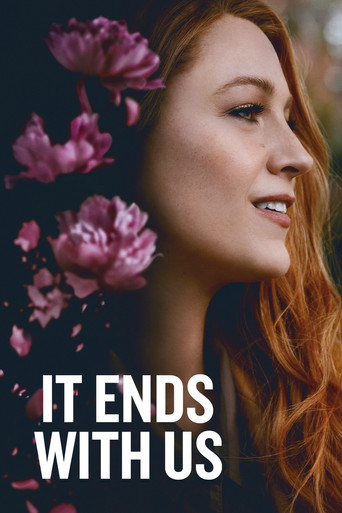
Based on Colleen Hoover’s novel, It Ends with Us follows Lily Bloom (Blake Lively) as she returns to her hometown to attend her father’s funeral and finds herself in a troubled relationship with neurosurgeon Ryle Kincaid (Justin Baldoni). As Ryle’s violent behavior strains their relationship, Lily’s past with high school sweetheart Atlas (Brandon Sklenar) further complicates matters.
The film works best when it focuses on Lily, with Blake Lively’s charisma standing out despite a weak script and awkward wardrobe choices. It could have succeeded as a charming rom-com about Lily’s flower shop and her reconnection with Atlas. However, it overextends itself by delving into the toxic relationship between Lily and the highly unlikable Ryle. Serious topics like suicide and domestic abuse deserve thoughtful exploration, but their abrupt inclusion in the midst of a love triangle feels as misplaced as if Despicable Me suddenly shifted to a discussion on gun control.
A prime example of the film’s missteps is the portrayal of both the father and Ryle. Justin Baldoni’s lack of nuance in directing and acting makes Ryle’s motivations in the final act hard to believe, making the whole third act conflict meaningless. If Ryle was portrayed by Atlas’s actor, the whole film would have been more effective, revealing toxic traits more subtly. Additionally, the film fails to create a meaningful parallel between mother and daughter, reducing the generational theme suggested by the title to a caricature of monstrous behavior. The mother’s expectation that the daughter speak at the funeral of someone who nearly killed a high school boy feels especially repulsive.
Ultimately, the film’s attempt to blend a cozy rom-com with serious themes like domestic abuse and suicide is uneven. The film’s focus on romantic subplots and flashbacks are charming within itself, but totally detracts from its exploration of deeper issues, leaving it unable to fully realize its potential. In one point, you are wondering why Lily and Atlas took so long to reconnect, and in others, the movie wants you to have deep understanding on why it’s hard for Lily to leave Ryle. Jenny Slate’s is great (as she always is) as the supporting friend, and is capable of convincing the audience that her character would work in a flower shop, despite not liking flowers! But other than her, the film ends with us bored and unsatisfied.
Still courtesy of Sony Pictures Releasing Canada
- 1Dune: Part Two
- 2Conclave
- 3Better Man
- 4The Substance
- 5Challengers
- 96It Ends with Us#96 of 110
- Where to watch
 Netflix
- Where to watch
 Prime Video
 Play trailer


- Original title
- It Ends with Us
- Director
- Justin Baldoni
- Cast
- Blake Lively, Justin Baldoni, Jenny Slate, Brandon Sklenar, Hasan Minhaj, Kevin McKidd, Amy Morton, Alex Neustaedter
- Rated
- PG-13
- Screenwriter
- Christy Hall, Talia Spencer
- Composer
- Rob Simonsen, Duncan Blickenstaff
- Cinematography
- Barry Peterson
- Editor
- Robb Sullivan, Oona Flaherty
- Country
- Language
- English
- Budget
- $55 million
- Box office
- $351.441 million
- Distributor (CA)
- Sony Pictures Releasing Canada