
OVERVIEW
After tackling gothic horror, ghost stories, Japanese mythology, and slapstick comedy, LAIKA returns with its sixth and most ambitious production yet, Wildwood, bringing the studio’s impeccable stop-motion craftsmanship to the scale of a fantasy epic. Its own attempt at The Chronicles of Narnia, if you will. It might not be as enchanting as that sounds (or looks), but one must be thankful that there is no rock opera.
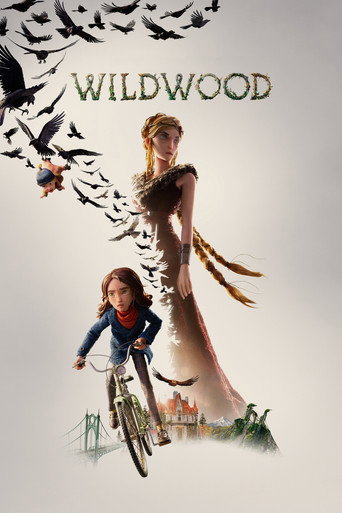
It follows Prue (Peyton Elizabeth Lee), a young girl who, against her parents’ wishes, takes her baby brother outside to play, only for the toddler to be kidnapped by a murder of crows and carried into the forbidden wilderness. Together with her schoolmate Curtis (Jacob Tremblay), she ventures into the forest to rescue him, discovering a hidden world of talking animals, ancient magic, and an enigmatic governess (Carey Mulligan) with a dark past.
BACKGROUND
Wildwood is based on the first novel in a fantasy trilogy written by Colin Meloy, frontman of the indie rock band The Decemberists, and illustrated by his wife, Carson Ellis. Director Travis Knight became interested in adapting the story back in 2010, even before the novel was published in 2011, but the project had to wait until LAIKA developed the technology and resources necessary to realize its ambitious scale. Sixteen years later, the film finally arrives as the studio’s first feature since Missing Link (2019), with a screenplay by Chris Butler, who previously directed ParaNorman (2012) and Missing Link. The production itself took approximately seven years, becoming one of the largest stop-motion undertakings in cinema history, with more than 1,000 artists and technicians, around 230 puppets, 130 physical sets, and over 142,000 individually printed faces. At 132 minutes, it also holds the record of the longest stop-motion animated feature ever made.
THE REVIEW
If there is one thing Wildwood unquestionably succeeds at, it is making every bit of that extraordinary effort visible on screen. Visually, it is nothing short of mesmerizing, with an astonishing level of craftsmanship that makes it difficult to believe what we are watching was actually built, sculpted, painted, and animated by hand. Every frame seems to hold so much to look at and discover, whether it is the intricate textures of the characters’ costumes, their shifting expressions, or the smallest details and imperfections of the environments. And that’s without mentioning the enormous sets, sometimes populated by hundreds of characters moving about, all without sacrificing any of that attention to detail. Particularly astonishing is the flight of an eagle, a sequence that represents something of a pinnacle of stop-motion artistry, with a fluidity and complexity of movement that almost defies belief. There is a wonderful tactile quality to it all, a sense that everything has weight and occupies a physical space. The lighting, the creativity and richness of the compositions, the seamless integration of practical and digital techniques. It is an overwhelming visual achievement that keeps you wondering how it was ever accomplished, and one that deserves every bit of praise it will inevitably receive.
Yet somewhere in translating the rich, 500-page novel into a still lengthy, but considerably more constrained, 132-minute film, something was lost along the way. Like many of LAIKA’s previous films, Wildwood never quite achieves the immersion or emotional investment it strives for. You are always conscious of what you are meant to be feeling, without ever quite getting there yourself. Take, for example, Pixar’s Elio, one of the studio’s more middling efforts, and how, early on, a tear rolls down the protagonist’s cheek as he finds comfort in the idea of life beyond Earth, instantly conveying his loneliness and desire to belong. It’s a small moment, but one that accomplishes something Wildwood, for all its extraordinary effort, frustratingly struggles to achieve. And this is a recurring frustration with LAIKA’s films, one that has held even its most celebrated efforts, such as Coraline and Kubo and the Two Strings, back from becoming truly great films.
Here we have a protagonist, Prue, who has a visibly strained relationship with her parents, feels unfulfilled, isn’t particularly pleasant toward others, and can be downright selfish at times. Her journey to rescue her brother, putting herself in danger along the way, seems like a natural opportunity to develop those characteristics into a meaningful arc. But what we get instead is a character mostly being carried through events, going through the motions of what the story requires of her. She wants to rescue her brother because, well, of course she does. He’s her brother. There is nothing particularly distinctive about their relationship established before his kidnapping, no underlying conflict that needs to be resolved. Neither do her connections with the other characters, or the parallels with Alexandra, seem to teach her much about herself. Add to that the fact that she downright abandons Curtis, later returning home seemingly having forgotten about the boy, and it certainly doesn’t earn her any points.
Curtis is by far the more interesting character and, curiously, the one whose arc develops more naturally throughout the film, as we actually see how the events gradually change him. A jail escape sequence is brilliantly staged and executed, but more importantly, it allows him to form a connection with his fellow inmates, gradually gaining courage while inspiring the others through his determination and selflessness. The brutal action he takes during the film’s climax is an interesting and rather surprising culmination of that journey, carrying an emotional weight largely missing from the rest of the film. In contrast, the central confrontations between Prue and Alexandra lack much of that emotional force. Alexandra has an elaborate backstory that explains who she is, what motivates her, and what we are meant to feel about her, without ever quite making us experience those emotions ourselves. Part of the problem is how scattered the exploration of her past is, introduced at the beginning of the film and later revisited through a story told by Prue’s parents, rather than allowing those feelings to develop naturally through her interactions with the other characters. By the end, much like Prue, we’re left without a particularly strong sense of who Alexandra really is.
Which brings us to perhaps the most surprising frustration of Wildwood: how little the adventure itself manages to captivate. A strange outcome for a film with so much creativity on display. There are the monumental sets, countless fascinating character designs (many of which awkwardly come and go throughout the narrative), and the evocative and textured orchestral score by Dario Marianelli. And yet the experience remains cold and detached. You recognize the moments when the film wants you to shed a tear or feel frightened, but you’re left mostly admiring the technical achievements. Even with its whimsical fantasy, occasionally grotesque imagery, and surprisingly brutal violence, the film never quite establishes a consistent atmosphere that makes any of it particularly affecting, something that, curiously enough, Travis Knight achieved more successfully in the far less ambitious Masters of the Universe just a few months earlier. Much of it comes down to the uneven pacing, with the film constantly moving between events, characters, and revelations without allowing much of anything to settle. It needed more room to breathe, moments that allowed the characters to connect with their surroundings and the audience to discover the world alongside them, letting our imagination fill in some of that awe and wonder.
FINAL THOUGHTS
A monumental achievement in stop-motion animation, Wildwood is visually mesmerizing, with an extraordinary level of craftsmanship that packs every frame with so much detail and care, leaving you wondering how on earth they managed to accomplish it all. Yet for all its technical ambition, the film struggles to make us care about its characters or become truly invested in its fantasy world, leaving us more impressed by the artistry than by the adventure itself.
- 1Everytime
- 2Hadestown: The Musical
- 3Tuner
- 4Minotaur
- 5You Can See Everything
- 140Wildwood#140 of 220
- Where to watch
- New In Theaters
- Where to watch
- Coming soonOct 29, 2026
 Play trailer


- Original title
- Wildwood
- Director
- Travis Knight
- Cast
- Peyton Elizabeth Lee, Jacob Tremblay, Carey Mulligan, Mahershala Ali, Angela Bassett, Awkwafina, Jake Johnson, Charlie Day
- Rated
- 14A
- Screenwriter
- Chris Butler, Emanuela Cozzi, Valentin Lucas
- Composer
- Dario Marianelli
- Cinematography
- Caleb Deschanel
- Country

- Language
- English
- Budget
- $100 million