OVERVIEW
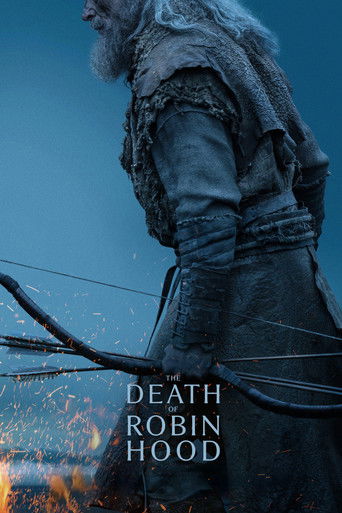
Robin Hood gets the Logan treatment in The Death of Robin Hood, with Hugh Jackman once again playing an aging hero gone numb after a lifetime of violence. He spends his days living rough off the land, a lone-wolf nomad scraping by after years of war and pillaging, and when his old companion Little John (Bill Skarsgard) comes asking for one last favor, helping retake a farm and family he stole in the first place, Robin is dragged into one final bloodbath that leaves him gravely wounded and carried off to a remote priory to heal. He is ready to leave this world, but the prioress, Sister Brigid (Jodie Comer), saves his life despite his plea. As he slowly recovers, he gets to reflect on what a lifetime of blood actually bought him.
BACKGROUND
The film is the “one for me” for young director Michael Sarnoski. His critically acclaimed 2021 debut Pig, a dark and subversive film that saw Nicolas Cage in one of his best late roles, made him a voice to watch and landed him the studio blockbuster A Quiet Place: Day One, which was also financially successful, despite not being very good. He was able to go a more personal route in his third feature, following a passion of his, the Robin Hood legend, and more specifically, a ballad he heard as a kid that told of the legend’s end. It’s not the first adaptation of that 17th-century ballad, “Robin Hood’s Death”, as Connery had stepped into the role in 1976’s Robin and Marian, a film that, coincidentally, was almost called “The Death of Robin Hood” before studios disapproved, and that also stripped the hero of his mythos while keeping it warm and hopeful. Sarnoski’s take was sold as dark and grim from the start, which attracted Jackman, who was impressed by Pig and drawn to another Unforgiven-kind-of role. The modest budget film became an easy acquisition for A24, the idea of Robin Hood finding his Logan end too good to pass on. For audiences, though, the premise wasn’t very inviting.

THE REVIEW
It is funny to see how the same grimness that drew crowds a couple of years ago now feels too dour and unappealing from the outset. Perhaps because since Pig and Logan, we’ve seen Indiana Jones, James Bond, John Wick, Rambo, Batman, and many other protagonists grow depressed, beaten by humanity, and detached from the world. Seeing Robin Hood take similar steps feels more predictable today than a modern swashbuckler who would have him sword-fighting and throwing one-liners.
The film opens dark, as in “hard to see,” and, after a brutal first act that establishes that Robin has become a ruthless, inhumane machine on a killing spree, it grows meditative as it goes. It moves unhurried at its own pace, and both Jim Ghedi’s simplistic folklore score, all sparse strings and mournful hymns, and the gritty cinematography that favors medium shots over the vast, isolating beauty of the landscape, keep it faithful to Sarnoski’s vision of a drained medieval world. It can feel like a chore at times, especially as it insists on making the same point over and over about the pain Robin caused.
That is not to say there is no merit to be found, much of it owed to the performances and to small individual moments that save the day. Despite this not being new material for Jackman, he still commits with the intensity he usually brings. With his most notable roles seemingly behind him, he reflects on his own limitations, and though he is still a huge presence at 57, he plays Robin with more pathos than he brought to Logan. He feels tired for once, and the lack of life in his eyes makes the character as compelling as the script will allow. Comer and Skarsgard, the latter unrecognizable, get strong arcs too, while Noah Jupe has an interesting small role as a young man seeking vengeance.
The action scenes that open the film are extremely violent, perhaps a bit too much so, but they leave a residue that lingers throughout the rest of the film and justifies how even someone like Robin could have become so hopeless. The best scene, though, is a conversation between Robin and another patient at the priory, a leper who turns out to be one of Robin’s own past victims. The two of them reflect on legacy, and the moment, grace offered by a man Robin once maimed, provides the film’s most hopeful note. It is a fantastic scene, unfortunately surrounded by many mediocre ones.
FINAL THOUGHTS
The Death of Robin Hood will not be the most fun time you will have at the cinema in the summer of 2026. Its reflection on regret and the cycle of violence has its moments, especially where grace arrives in the most unexpected ways. At the same time, we’ve seen similar dark paths swallow all our childhood heroes over the last decade, and Jackman’s compelling performance can only do so much against the drab environments, desaturated colors, and the script’s purposeful meandering. Here’s hoping whatever comes next for Sarnoski and for Robin Hood is more colorful and, well, fun.
Still courtesy of Elevation Pictures
- 1Everytime
- 2Hadestown: The Musical
- 3Tuner
- 4Minotaur
- 5You Can See Everything
- 158The Death of Robin Hood#158 of 219
- Where to watch
 Prime Video
- Where to watch
- Rent or buy at Apple TV Store, Amazon Video
 Play trailer


- Original title
- The Death of Robin Hood
- Director
- Michael Sarnoski
- Cast
- Hugh Jackman, Jodie Comer, Bill Skarsgård, Murray Bartlett, Noah Jupe, Jade Croot, Faith Delaney, Tabitha Smyth
- Rated
- 14A
- Screenwriter
- Michael Sarnoski
- Composer
- Jim Ghedi
- Cinematography
- Pat Scola
- Editor
- Andrew Mondshein
- Country

- Language
- English
- Budget
- $25 million
- Box office
- $9.896 million
- Distributor (CA)
- Elevation Pictures