OVERVIEW
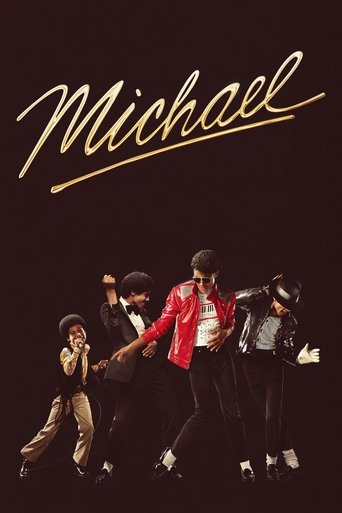
Covering the period from the Jackson 5’s Motown debut in the late 1960s to the release of Bad in 1987, Michael charts Michael Jackson’s (Jaafar Jackson) decades-long struggle to break free from the control of his father and manager Joseph Jackson (Colman Domingo) while becoming one of the most idolized pop stars the world has known. Directed by Antoine Fuqua and written by John Logan, it joins the lineage of modern estate-approved music biopics.
BACKGROUND
Originally a significantly different film, Michael has been a long-gestating project, affected by the 2023 SAG-AFTRA strike and a two-year search for the lead role (which ultimately landed on the singer’s nephew). It still had to undergo an expensive reshoot (reported by some outlets to cost $50 million) after it was discovered that a clause in Jackson’s 1994 settlement prohibited any depiction of his accuser, Jordan Chandler, who was meant to open the film. Fuqua was forced to revise the story, transitioning from a bookend structure to a clearer, more direct narrative and setting it as part one of a two-part series. The film is positioned as Lionsgate’s largest tentpole after a weak 2024 and 2025, aiming to recapture the success of producer Graham King’s own Bohemian Rhapsody. Fuqua has stated that he was interested in the person behind the legend rather than a greatest-hits montage. Whether that claim was exaggerated or the film was totally transformed after the process is not a difficult mystery to untangle.

THE REVIEW
The film opens with a young Michael (Juliano Krue Valdi), a boy with the voice to bring tears of joy to producers, being trained by his father, played by Colman Domingo in makeup that makes him look like one of the vampires from Sinners, to hold eye contact with the audience while performing and to give up any hope of a normal childhood. There is unexpected complexity in those early scenes, like in a touching moment where Michael tells his mom he has realized he cannot have any friends, since even other children his age only want his autograph.
Colman Domingo gives Joseph subtle signs of his own insecurity that translate into the abuse of his sons, with a sad look underneath suggesting a man whose sense of meaning has blurred into his children’s success and who has nothing to fall back on once that success slips away from him. It is a strong start, and perhaps the film should have made that section its whole thing, but alas, it soon jumps past a few years and takes the by-the-book biopic format that surprises no one who saw that six Jacksons were involved in the production.
Credit where it is due, Jaafar Jackson genuinely strives to portray his uncle convincingly, nailing all the moves while making them feel natural rather than coming across as mere imitation, and largely succeeds. The musical sequences are as well-produced as a $200 million biopic can make them, with sound mixing that lets the concert scenes play with real weight in IMAX, even though the cinematography around them never lets much creativity through. And the songs are the songs: Beat It, Thriller, Human Nature, and Don’t Stop ‘Til You Get Enough still sound like nothing else in popular music, and there are stretches where you forget everything around them.
The problem is how incurious Michael is about its own subject, even inside the window it chooses to cover. It keeps shifting the focus, reverting to the least interesting aspect of a man whose talents are indeed superior by a wide margin to anything else at the time, and who, because of that enormous fame, was even robbed of the most natural human behaviors. Obsession with perfect looks, animals for friends, all are mentioned, but Fuqua insists on coming back to the abusive and egocentric father who wants to leverage the talent he raised and molded (that, and the recreation of the meme of Jackson eating popcorn, which also makes numerous appearances).
And fine, even with that focus, there were interesting angles that could have been explored, yet the film remains surface-level. Michael keeps saying over and over how he wants to be free of his father and find his own voice, but other than being forced to go on tour with his brothers, Joseph does not seem to restrict him all that much in his adult years. He even takes Michael’s nose job quite well.
The isolation theme goes the same way. Young Michael says he has no friends, and the line lands honestly, but adult Michael seems to have far fewer problems holding normal conversations with his security guard or his manager. Fame, the one force that shaped every decision Jackson made from the age of eleven onward, barely registers here beyond a single shot of Michael shielding his face from a small crowd gathered at his gate. The brothers orbit without urgency, and so does everything else.
We were never going to get an in-depth look at the man in the mirror, but the approach Michael takes makes Bohemian Rhapsody look like a complex and cohesive character study in comparison. It jumps from one recognizable moment in Jackson’s life to the next, dramatizing them with little argument running through it, becoming a chain of this happened, and then this happened. Michael sits with gang members to recruit them for the Beat It video. Michael records Thriller, asking camera assistants to shoot his whole body. Michael moonwalks on Motown 25. Michael’s hair catches fire while filming the Pepsi commercial. Each beat is staged as a standalone recreation with no connective thread, as if the task were to confirm the audience got their greatest-hits money’s worth rather than to say anything about the man performing the hits.
Jaafar plays Michael throughout as a pure soul who does nothing wrong, other than the occasional surprise of a giraffe appearing. It forecloses the one question a Michael Jackson biopic has to ask: what was it like to be him? Michael only ever asks what he looked like, which is a much shallower film to make.
FINAL THOUGHTS
What is the point of a musical biopic? If the point is to celebrate an artist and send the faithful home humming, then Michael does the job, and fans will see their hero on a large screen, looking like he did and sounding like he did. For me, that is not enough. Better Man and A Complete Unknown showed us recently that a biopic can celebrate its subject and interrogate him at the same time, but Fuqua avoids the second half of that equation at every turn. When you adapt a man’s life for eternity, you take on a responsibility heavier than a concert film, and reducing Michael Jackson to his greatest hits is the cinematic equivalent of a cover act. The result is, you know it, really, really bad.
Still courtesy of Cineplex Pictures
- 1Everytime
- 2Hadestown: The Musical
- 3Tuner
- 4Minotaur
- 5You Can See Everything
- 192Michael#192 of 219
- Where to watch
 Crave
- Where to watch
- Rent or buy at Apple TV Store, Amazon Video
 Play trailer


- Original title
- Michael
- Director
- Antoine Fuqua
- Cast
- Jaafar Jackson, Colman Domingo, Nia Long, Juliano Krue Valdi, KeiLyn Durrel Jones, Miles Teller, Larenz Tate, Laura Harrier
- Rated
- PG
- Screenwriter
- John Logan
- Composer
- Lior Rosner
- Cinematography
- Dion Beebe, Dylan Goss
- Editor
- John Ottman, Harry Yoon, Tom Cross, Conrad Buff IV
- Country

- Language
- English
- Budget
- $250 million
- Box office
- $1.029 billion
- Distributor (CA)
- Cineplex Pictures