
OVERVIEW
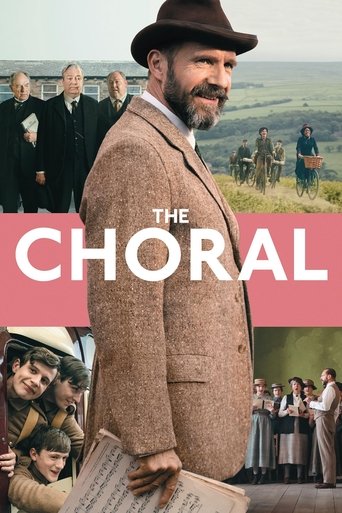
A quintessential British prestige drama that faithfully follows the genre’s conventions, The Choral tells a wartime story set in 1916 in a small Yorkshire town, about a community trying to sustain its choral society during difficult times. With most men away on the Western Front, including the chorus master, the group faces tough decisions. They recruit younger boys to fill the gaps and take a big risk by hiring a controversial new chorus master, Dr. Henry Guthrie, recently returned from Germany, along with all his conditions.
BACKGROUND
Because plenty of people still adore the Alan Bennett flavour of British period comfort, dry humour, and small-town fussiness, it did not take long for the playwright to bring Nicholas Hytner a new script. Born in the early days of the pandemic and originally intended as a play, the project shifted as Bennett kept picturing montages to illustrate the choir’s evolution. Hytner, in turn, saw no reason to reinvent the approach he had used in his previous collaborations with Bennett. Now on their fourth, the director knows the rules of the game well and shapes The Choral around a British ensemble, with Ralph Fiennes as the respectable anchor.
THE REVIEW
The film is well-mounted enough to offer a few chuckles, yet it never truly gives us a reason to care about any of it. With the war ongoing and young men coming home missing limbs, the film struggles to make a compelling case for why a group of people performing Elgar’s The Dream of Gerontius matters so much to this society.
There are huge disconnects between silly love triangles and families being broken apart by the monstrosity of war, and it constantly feels like we are focusing on the wrong aspects of these people’s lives. Never is this more apparent than in an awful handjob sequence, which tries to be funny and tragic in equal measure, but lands as embarrassingly misguided.
The script presents its fair share of conflicts, but it all feels rather weightless. The first big one, getting Guthrie and agreeing to his terms, is resolved with little fanfare and generates little impact. The movie then tries to force tension by repeatedly bringing up whether Elgar would approve of what they are doing, which feels completely pointless in a story where people are receiving news that their sons are being killed (who cares about copyright infringement in that situation?). The resolution of this whole arc is even more ridiculous than its stakes were in the first place.
There are also some flubs in the editing, like a rehearsal montage that is abruptly interrupted by the chorus master complimenting them. In a few scenes, you can also spot the actor playing the boy who is missing an arm, trying to hide it tucked inside his shirt. Other than that character, and the girl singer, most of the characters are not very likable. None worse than the girl who grows sick of waiting for the boyfriend at war and later treats someone with immense disrespect.
The musical sequences are good enough, well-performed, and capture why Guthrie’s interpretation, with a smaller orchestra and a younger lead than intended, is compelling. Watching the dynamics in the rehearsal scenes, like the judges being challenged to sing or the off-tune older ladies, is entertaining, and seeing the choir itself improve is satisfying. Fiennes gets a few laughs from his constantly frustrated looks as the choir misses the mark, but he can only do so much to give depth to a lame protagonist.
I truly wish the movie had been more effective in capturing the importance of music for this community, and for Fiennes’ Guthrie himself. A lot is said out loud, but little of it lands emotionally. We finish understanding the character’s motivations, but never gain our own.
FINAL THOUGHTS
The Choral might scratch British prestige itch, but its jumbled tone keeps the story from truly singing the way it wants to.
- 1Everytime
- 2Hadestown: The Musical
- 3Tuner
- 4Minotaur
- 5You Can See Everything
- 167The Choral#167 of 218
- Where to watch
- Rent or buy at Apple TV Store, Amazon Video
- Where to watch
 Max
Max
 Play trailer


- Original title
- The Choral
- Director
- Nicholas Hytner
- Cast
- Ralph Fiennes, Roger Allam, Mark Addy, Alun Armstrong, Simon Russell Beale, Robert Emms, Lyndsey Marshal, Ron Cook
- Rated
- PG
- Screenwriter
- Alan Bennett
- Composer
- George Fenton
- Cinematography
- Mike Eley
- Editor
- Tariq Anwar
- Country

- Language
- English
- Box office
- $9.533 million