
Status incongruence is the gap between how people see themselves (hard-working, educated, deserving) and where they actually sit in the social or economic order. That gap often breeds frustration, even resentment, because the material markers of success don’t match the effort people feel they have put in. Our culture feeds this. Advertising rarely says “this is for the wealthy.” It says “you deserve this.” Brands sell the idea that a car, a handbag, or a vacation isn’t a privilege but a rightful reward. Social media sharpens the feeling, as people scroll through curated lifestyles and see themselves on the wrong side of the line, often leading to debt-driven consumption. Buying beyond means becomes a way of proving you have earned it.
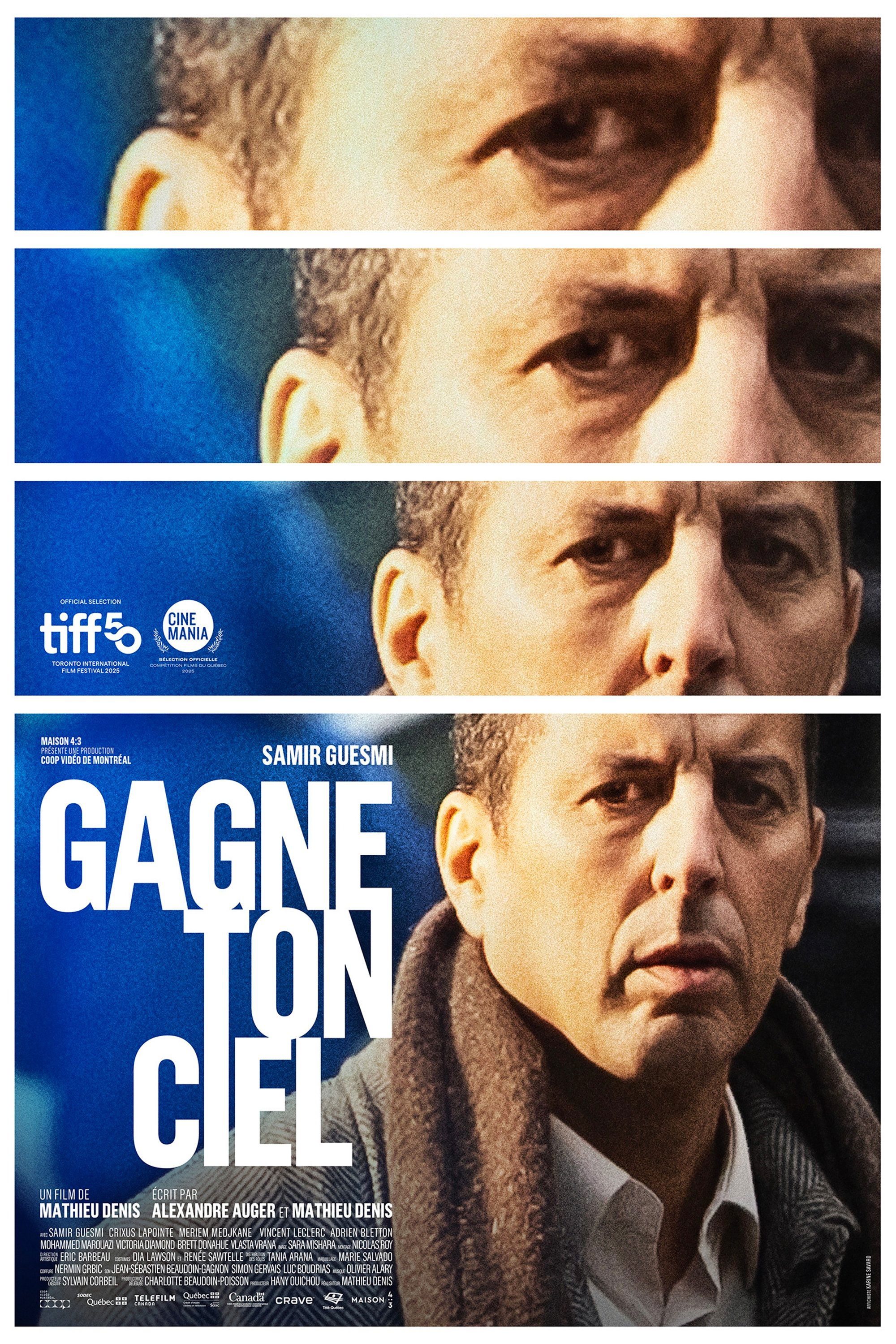
The Cost of Heaven (Gagne ton ciel) is built around this idea, as it builds on the foundation of a true story of a North African engineer in Montréal who, after risky investments, attempted to kidnap a billionaire’s grandson. In real life, the kidnapping never took place, but the film imagines what might have happened had his plan succeeded. Here, he becomes Nacer, also in Montréal, who believes years of loyalty to his company should have placed him in a higher position. We first see him entering a luxury car in a showroom, smiling in a way we will not see again for the rest of the film, not even in his happiest moments with his family. He is drawn to materialism while feeling entitled to it, without fully understanding how to get there.
The film plays like a modern High and Low, but told from the other side, exploring similar questions about what is owed to someone and the consequences of taking shortcuts to get there. By weaving in investments and crypto, it feels even more contemporary and more relevant than Spike Lee’s concurrent (and disastrous) Highest to Lowest.
Samir Guesmi plays Nacer with a performance that brings Kendall Roy in Succession to mind, especially in how he spends half the time with his mouth wide open, remorseful of his failed plan yet knowing full well that he messed up. His neglect of a loving family, loyal friends, and even a generous boss feels authentic, grounding the film with a portrait of selfishness that is recognizably human. When one of his risky investments pays off, it feeds the illusion that he has cracked the system, only to betray him later and push him toward even more destructive actions.
From there, the film builds genuine suspense and heartbreak. It sometimes subverts expectations, portraying the boss and the broker in a positive light, or showing that Nacer had a solid network of support he stubbornly ignores. A scene with his friends underlines this. As the film goes, it also leans on less subtle choices, such as flipping the image upside down to suggest that what we see may not be real. Its ending is abrupt and while it satisfies in a way, it cuts short some of the character’s consequences. There is also a sense that Nacer’s ambition appears only at the start of the film rather than growing gradually over the years, which lessens the impact. The cinematography does not help either, with the film often looking oppressively dark and, at times, quite unattractive. Still, moments with his friends, and especially his scenes with the boy, land with force, making the film effective for what it sets out to do.
This is part of Reviews On Reels TIFF 2025 Coverage. Due to the hectic rhythm of a film festival, it may be tweaked in the future. Still courtesy of TIFF.
- 1Sentimental Value
- 2Hamnet
- 3One Battle After Another
- 4Ne Zha 2
- 5Blue Moon
- 96The Cost of Heaven#96 of 256
- 1Sentimental Value
- 2Hamnet
- 3Blue Moon
- 4Sirāt
- 5Tuner
- 39The Cost of Heaven#39 of 74
- Where to watch
 Crave
Crave- Where to watch
- Not available for streaming
 Play trailer


- Original title
- Gagne ton ciel
- Director
- Mathieu Denis
- Cast
- Samir Guesmi, Crixus Lapointe, Meriem Medjkane, Vincent Leclerc, Adrien Bletton, Mohammed Marouazi, Victoria Diamond, Brett Donahue
- Screenwriter
- Alexandre Auger, Mathieu Denis
- Composer
- Olivier Alary
- Cinematography
- Sara Mishara
- Editor
- Nicolas Roy
- Country

- Language
- French