
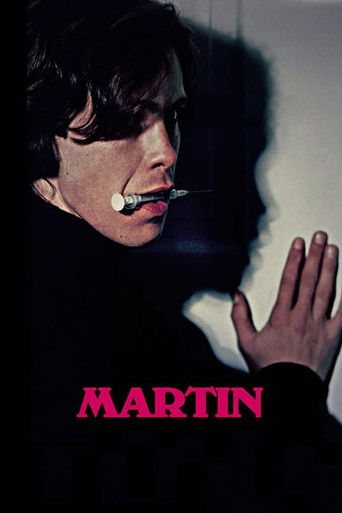

Martin is about a young man so isolated, he’s no longer sure if he’s even human. George A. Romero paints him as both victim and predator—adrift, disconnected, and dangerously lost. He drifts through life without connection, identity, or purpose, trapped in a fog of meaninglessness.
Romero, known for reinventing horror with Night of the Living Dead, takes on vampirism with a similarly subversive approach. But his vampire isn’t a seductive immortal; he’s a confused young man who thinks he needs to drink blood to survive. It might be real—or it might just be mental illness, repression, and inherited trauma. With characteristic boldness, Romero never confirms one or the other, giving us both: Martin has disturbing, terrifying murder scenes—especially on the opening attack in a train car—but at its heart, it’s a tragic character study about alienation and the fear of not belonging.
Romero cast John Amplas, a stage actor in his first film role, and he’s fantastic. Amplas plays Martin with quiet intensity, capturing his inner chaos and making us believe that his delusions might actually be true. He doesn’t come across as a monster, but as someone lost, uncertain, and trying to make sense of what he’s been told he is.
The film’s central metaphor might not be as sharply drawn as Romero’s work with zombies, but Martin still offers a powerful exploration of loneliness, religious repression, and family alienation. It’s deeply empathetic, pulling us into Martin’s internal struggle. Though often introspective and slow-burning, sudden bursts of violence snap us back to attention, and Amplas’s haunted performance holds everything together.
Watching it today, it’s hard not to think of our post-pandemic world, where so many people emerged from isolation more emotionally adrift than ever. Maybe the pandemic turned a few of us into vampires.
- Where to watch
 Not available for streaming
 Not available for streaming
 Play trailer


- Original title
- Martin
- Director
- George A. Romero
- Cast
- John Amplas, Lincoln Maazel, Christine Forrest, Elyane Nadeau, Tom Savini, Francine Middleton, Roger Caine, Sara Venable
- Rated
- R
- Screenwriter
- George A. Romero
- Composer
- Donald Rubinstein
- Cinematography
- Michael Gornick
- Editor
- George A. Romero
- Country

- Language
- English
- Budget
- 250000