
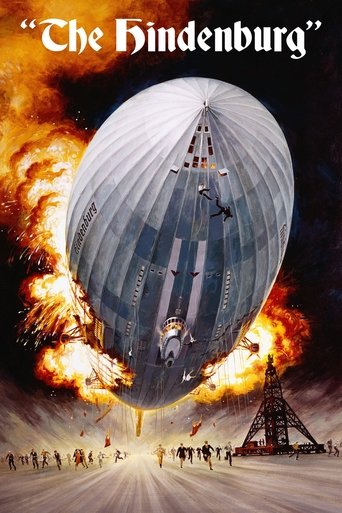
Just as superhero movies dominated the 2010s, the 1970s were the heyday of disaster films. Movies like The Poseidon Adventure and The Towering Inferno flooded theaters, featuring large ensemble casts grappling with catastrophic events, be it a burning skyscraper or a capsized ship, and showcasing their struggles to survive and escape. The Hindenburg fits neatly into this trend, dramatizing the real-life disaster of the German passenger airship LZ 129 Hindenburg, which tragically caught fire and was destroyed during its landing at Naval Air Station Lakehurst in New Jersey on May 6, 1937.
The film follows a diverse group of passengers aboard the Hindenburg, embarking on what is meant to be a luxurious journey across the Atlantic. Among them is Captain Max Pruss (George C. Scott), who must navigate the various personalities on board while managing rumors of sabotage threatening the airship. The story unfolds into an Agatha Christie-style mystery, with the captain interviewing crew members to uncover who may have planted a bomb.
Directed by Robert Wise, renowned for his acclaimed work on epic musicals like West Side Story and The Sound of Music, The Hindenburg showcases his talent for crafting visually striking and grand films. Although the theory of sabotage has been largely dismissed by historians, its blend of disaster and mystery genres remains intriguing. Unfortunately, the mystery becomes apparent early on, and despite a few standout scenes, such as the tense conversation in the bunk bed, the film struggles to keep viewers engaged.
A confusing portrayal of the Nazis also complicates the film’s narrative. By casting German characters as the protagonists, the film attempts to humanize them, imbuing their actions with heart and motivation. However, this choice ultimately feels awkward and inconsistent, especially given the historical context. For much of the movie, the pacing drags, mirroring the airship’s slow journey. Character interactions lack energy, making it challenging to invest emotionally in their fates.
Where The Hindenburg succeeds, however, is in its glorification of the zeppelin itself. The film expertly showcases the airship’s grandeur, beginning with a captivating introduction to the evolution of air travel and culminating in the Hindenburg’s magnificent departure. Accompanied by a stirring score from David Shire, the visuals of the ship’s interior, the crew’s routines, and the interactions among passengers create an engaging atmosphere. Notably, the tense scene where the crew must fix a tear in the fabric of the airship is more gripping than many of the character interactions.
The climax, the disaster itself, is another highlight. In a clever stylistic choice, the film transitions to black and white, seamlessly blending real-life newsreel audio with footage of the explosion. However, by this point, the emotional investment in the characters has vanished, leaving the disaster feeling more like an empty spectacle than a tragic conclusion to their stories.
In summary, while The Hindenburg offers a fascinating look at a significant historical event and showcases impressive visuals and effects, it ultimately falters in its character development and pacing. The film serves as a spectacle but lacks the emotional weight necessary to make the tragedy resonate with audiences.
- 1One Flew Over the Cuckoo's Nest
- 2Dersu Uzala
- 3Jaws
- 4Nashville
- 5Manila in the Claws of Light
- 43The Hindenburg#43 of 51
- Where to watch
- Rent or buy at Apple TV Store, Amazon Video
- Where to watch
- Not available for streaming
 Play trailer


- Original title
- The Hindenburg
- Director
- Robert Wise
- Cast
- George C. Scott, Anne Bancroft, William Atherton, Roy Thinnes, Gig Young, Burgess Meredith, Charles Durning, Richard Dysart
- Rated
- PG
- Screenwriter
- William Link, Nelson Gidding, Richard Levinson
- Composer
- David Shire
- Cinematography
- Robert Surtees
- Editor
- Donn Cambern
- Country

- Language
- English
- Budget
- $15 million