
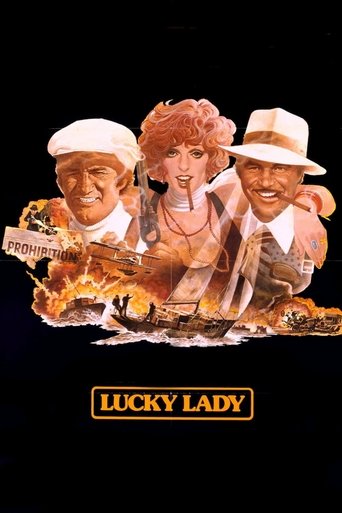
Lucky Lady feels like a 1970s version of Challengers, trading tennis for bootlegging during Prohibition, with Liza Minnelli, Gene Hackman, and Burt Reynolds forming the love triangle. Set in the 1930s, the trio embarks on a rum-running venture, smuggling liquor from Mexico to the U.S. After their land-based schemes fall apart, they decide to try their luck at sea. Along the way, they face rival bootleggers and relentless government agents, all while the two men compete for Minnelli’s recently widowed character, who seems equally fond of both.
Despite being poised for success, with its star-studded cast and director Stanley Donen (Singin’ in the Rain, Charade) at the helm, Lucky Lady fell short at the box office. At the time, audiences criticized the script for lacking substance and failing to deliver enough witty banter between the leads. The film also had a troubled production, with the ending being re-shot several times. But from today’s perspective, the script holds up just fine, allowing the charismatic trio to deliver an enjoyable, lighthearted adventure on the high seas. For what it is, the movie offers a fun, breezy experience.
It’s particularly refreshing to see a strong female protagonist at the center, a factor that reportedly scared off several male actors during casting. As in Cabaret, Minnelli shines, expertly portraying the independence and strength of her character, Claire, and even delivering a memorable musical number early on. Her energy and charm are a driving force in the film.
However, the script reveals Claire’s feelings toward both men too soon, leaving little room for any surprising developments in the love triangle later on. Hackman seems to coast through his role, though his laid-back demeanor works for the gruff nature of his character, especially when contrasted with Reynolds’s more energetic, playful performance. Watching these characters get rich but remain unfulfilled halfway through the movie adds an ironic twist, as they continue their schemes simply because they don’t know what else to do.
For me, the most fun came during the often-maligned boat scenes, which were reportedly difficult to shoot. The midpoint action sequence, involving mini-bombs made from bottles, is especially entertaining, as are some clever moments of evading the authorities. There’s even a surprising death later in the film that adds a jolt of seriousness and works effectively within the story. Overall, the film’s joy comes from spending time with these three leads. Watching it today, it holds up surprisingly well, particularly in its ahead-of-its-time portrayal of a strong female lead.
- 1One Flew Over the Cuckoo's Nest
- 2Dersu Uzala
- 3Jaws
- 4Nashville
- 5Manila in the Claws of Light
- 25Lucky Lady#25 of 51
- Where to watch
- Not available for streaming
- Where to watch
- Not available for streaming
 Play trailer


- Original title
- Lucky Lady
- Director
- Stanley Donen
- Cast
- Gene Hackman, Liza Minnelli, Burt Reynolds, Geoffrey Lewis, John Hillerman, Robby Benson, Michael Hordern, Anthony Holland
- Rated
- PG
- Screenwriter
- Willard Huyck, Gloria Katz
- Composer
- Ralph Burns
- Cinematography
- Geoffrey Unsworth
- Editor
- Tom Rolf, Peter Boita, John C. Horger, George B. Hively
- Country
- Language
- English
- Budget
- $13 million
- Box office
- $24.442 million