
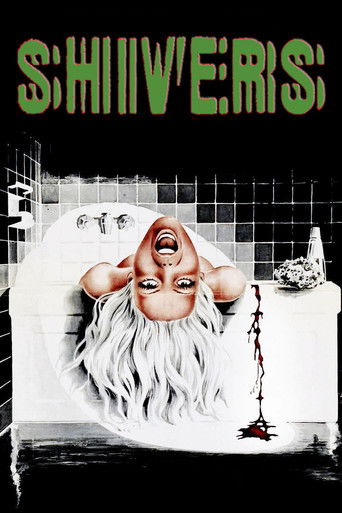
Shivers is David Cronenberg’s first “real” film, following two smaller projects, and it became his first significant success, hailed as one of Canada’s greatest films at the time. Serving as a precursor to his signature body horror style, the story takes place in a high-rise apartment complex where parasitic creatures infect residents, turning them into uncontrollably lustful beings. The film’s most unsettling moments come from the way the parasites move inside their hosts, often grotesquely emerging from their mouths.
Cronenberg skillfully builds an atmosphere of tension and weirdness, although the low budget occasionally undermines the overall effect. The film has a few darkly humorous scenes as well, like when characters’ affections become awkwardly intense or when a creature strikes an umbrella, leading the women to believe it’s a bird. However, character development is minimal, with the focus squarely on the spreading infection. The movie moves at a brisk pace, delivering enough tense moments, but doesn’t fully capitalize on its confined setting. It would have been more effective had the feeling of entrapment been heightened. An early suicide scene also feels somewhat unsatisfying, sidestepping the need for deeper motivation behind the outbreak beyond a detached voice-over.
Despite these minor flaws, Shivers succeeds as a genre piece, delivering enough eerie moments to creep out viewers and showcasing the early seeds of Cronenberg’s future work in body horror.
Still courtesy of Cinépix
- 1One Flew Over the Cuckoo's Nest
- 2Dersu Uzala
- 3Jaws
- 4Nashville
- 5Manila in the Claws of Light
- 32Shivers#32 of 51
- Where to watch
 Cultpix
- Where to watch
- Cultpix
 Play trailer


- Original title
- Shivers
- Director
- David Cronenberg
- Genre
- Horror, Science Fiction
- Cast
- Paul Hampton, Joe Silver, Lynn Lowry, Allan Kolman, Susan Petrie, Barbara Steele, Ronald Mlodzik, Barry Baldaro
- Rated
- 18A
- Screenwriter
- David Cronenberg
- Cinematography
- Robert Saad
- Editor
- Patrick Dodd
- Country

- Language
- English
- Budget
- 179000
- Box office
- $1 million
- Distributor (CA)
- Cinépix