
OVERVIEW
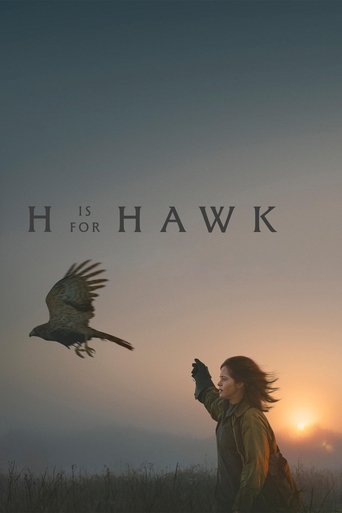
H is for Hawk follows Helen, a Cambridge natural science academic, as she deals with the sudden loss of her father. Clinging to a cherished memory of the two of them watching hawks, she buys a goshawk for falconry, despite warnings, and commits to training it to hunt. Slowly, this bond becomes the thing that finally forces her to face the grief she has been hiding.
BACKGROUND
The film premiered at the 2025 Telluride Film Festival before reaching theaters early in 2026. It is directed by Philippa Lowthorpe, who was approached in 2017 to adapt Helen Macdonald’s book of the same title, only a few months after losing her own father. She felt an immediate connection to the lead character and became especially interested in exploring the central father and adult daughter relationship.
THE REVIEW
Cinema gives us at least one movie a year about someone coping with grief with the help of a newly adopted animal, with The Penguin Lessons and The Friend as the two 2025 offerings. They can vary in tone but usually follow the same structure, where the routine imposed by the animal (frequently birds) forces the main character out of the shell the loss created. These films also tend to lean on humor, often from the animal’s stubborn nature and from onlookers’ reactions to the lead character carrying it around.
H is for Hawk does follow the same structure, but a few unique choices make it a winner among the pack. The fact that the titular animal is a carnivorous, hunting hawk rather than a clumsy penguin or a Great Dane keeps the film from slipping into mismatched tones. Mabel, the hawk, is a tough bird who does not think twice about following its own instincts and disobeying its human caretaker, which makes the film’s central connection feel earned.
The film also makes room for unexpectedly thrilling hunt sequences, in which the hawk captures rabbits or smaller birds. Those moments, filmed with documentary techniques, provide great interludes, with animal behavior becoming the most authentic part of the film.
The main grief subplot is less successful. There are schmaltzy flashbacks between Claire Foy and Brendan Gleeson that ultimately add little. Similarly, when not with the hawk, the film often has Helen either smoking or hearing repetitive advice and snark from her best friend, played by the endearing Denise Gough in a performance that could not be further from her Andor one, and from her mother. The mother, in particular, is written in a very stereotypical way.
Both Claire Foy and the film are at their best when Mabel is on-screen. Foy’s commitment to interacting with the animal is impressive, and the fact that she is able to stay within character opposite such a ferocious creature makes her work especially notable (two “Mabels” were used in the production). The bird feels present and responsive, as if it understands Helen, which makes her slow recognition of her depression, and her efforts to change it, surprisingly touching.
FINAL THOUGHTS
H is for Hawk is elevated by its titular hawk, which turns a familiar animal-helps-human-cope-with-grief structure into a touching journey for a main character you end up cheering for.
- 1Sentimental Value
- 2Hamnet
- 3One Battle After Another
- 4Ne Zha 2
- 5Blue Moon
- 101H Is for Hawk#101 of 256
- Where to watch
- Rent or buy at Apple TV Store, Amazon Video
- Where to watch
- Not available for streaming
 Play trailer


- Original title
- H Is for Hawk
- Director
- Philippa Lowthorpe
- Genre
- Drama
- Cast
- Claire Foy, Brendan Gleeson, Lindsay Duncan, Denise Gough, Sam Spruell, Emma Cunniffe, Josh Dylan, Arty Froushan
- Rated
- PG-13
- Screenwriter
- Emma Donoghue, Helen Macdonald
- Composer
- Emilie Levienaise-Farrouch
- Cinematography
- Charlotte Bruus Christensen
- Editor
- Nico Leunen
- Country



- Language
- English