
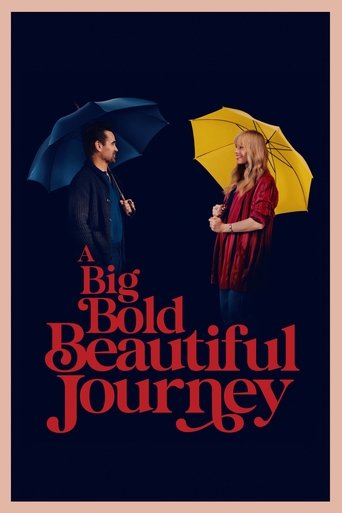
In my headcanon, A Big Bold Beautiful Journey never made it into the TIFF 2025 lineup because programmers worried it could win the festival. With its larger-than-life metaphors and neatly constructed emotions, it might have become the big audience favorite, only for the industry to later dismiss it as overstuffed and sentimental. That would have risked the kind of win that makes a festival look out of step with the awards conversation and lose a bit of relevancy, especially coming a year after The Life of Chuck had already taken the top prize.
Yet for a film with such a title, it is not as cloying as one might expect. It manages to find flashes of genuine feeling, even if it is far from award-winning material. It contains the pitfalls you might assume from its trailer, poster, or even just its name, but that does not mean it cannot warm your heart in doses.
Part of the small but persistent subgenre of metaphorical magical realism (The Life of Chuck, Big Fish, If), the film uses fantasy conceits to wrestle with universal themes: regret, self forgiveness, and loneliness. The device here is a rental car GPS that connects David (Colin Farrell) to Sarah (Margot Robbie) and takes them through portals into their past. As they revisit defining moments such as childhood hurts, breakups, and parental death, they learn more about one another and begin to question whether building a relationship together might be worth the effort.
Films like this always walk a tightrope. It is easy for them to drift into self-indulgence, pretentious grandiosity, or Hallmark sentimentality. Collateral Beauty and If stand as the ultimate examples where greeting card dialogue and hollow ideas lead to dreadful viewing experiences. A Big Bold Beautiful Journey is not free of that problem. It delivers its lessons about letting go and forgiving yourself with the bluntness of a GPS instructing you how to leave your own driveway. But it also carries moments that feel touching and sincere enough to keep it balanced.
The biggest reason the film works at all is Kogonada’s direction and the performances of Robbie and Farrell. The South Korean director brings his own sensibilities of restraint and melancholy, mixing with Ghibli-like traits such as Joe Hisaishi’s atmospheric and soothing score and a willingness to present magical elements as part of the world without over-explaining them. He grounds the absurdities with flashes of subtlety, like the scene where David talks to his father (Hamish Linklater). Linklater’s voice cracks as he recalls the heart of his premature baby, revealing fear, insecurity, and complexity that the film’s more obvious metaphors fail to capture.
Robbie and Farrell do their share of grounding, too. Robbie sells blunt lines and prickly character traits, such as insisting she should remain single, somehow making them believable. Farrell brings conviction to his regrets and traumas, even if the script leaves his relationship with his father sketchy and underdeveloped. Where the writing is clearer, like in the scene where both characters end past relationships, the film is efficient and affecting. Together, the two share easy chemistry, and they remain charming even when the dialogue makes their work harder.
Still, the film cannot resist packaging its lessons in neat little boxes. Metaphors are explained out loud, and every stop on the journey becomes an obvious life lesson. More ambiguity, more texture in David and Sarah’s bond, and especially a more ambitious structure would have helped.
Even so, the film’s uneven choices do not erase its affecting moments. It can be frustrating to see it present its insights as if they were world-shaking revelations, yet there are still grace notes in the honesty of its characters’ regrets. By the end, what comes through is its well-meaning spirit and simple desire to heal.
Still courtesy of Sony Pictures Releasing Canada
- 1Sentimental Value
- 2Hamnet
- 3One Battle After Another
- 4Ne Zha 2
- 5Blue Moon
- 104A Big Bold Beautiful Journey#104 of 256
- Where to watch
 Crave
Crave- Where to watch
 Max
Max
 Play trailer


- Original title
- A Big Bold Beautiful Journey
- Director
- Kogonada
- Cast
- Colin Farrell, Margot Robbie, Kevin Kline, Phoebe Waller-Bridge, Lily Rabe, Hamish Linklater, Jodie Turner-Smith, Chloe East
- Rated
- PG
- Screenwriter
- Seth Reiss
- Composer
- Joe Hisaishi
- Cinematography
- Benjamin Loeb
- Editor
- Susan E. Kim
- Country


- Language
- English
- Budget
- $45 million
- Box office
- $22.393 million
- Distributor (CA)
- Sony Pictures Releasing Canada