OVERVIEW
BACKGROUND

THE REVIEW
FINAL THOUGHTS
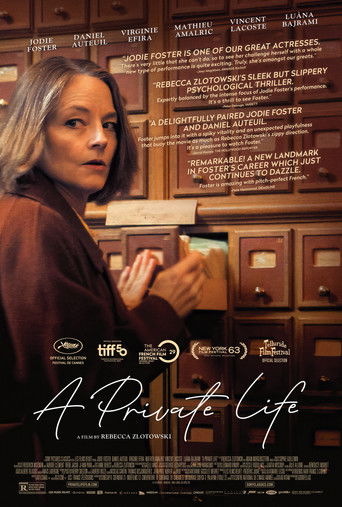
Still courtesy of Mongrel Media
Featured in
2026 Movies Ranked219 films
- 1Everytime
- 2Hadestown: The Musical
- 3Tuner
- 4Minotaur
- 5You Can See Everything
- 165A Private Life#165 of 219
Featured in
TIFF 2025 Movies Ranked74 films
- 1Sentimental Value
- 2Hamnet
- 3Blue Moon
- 4Sirāt
- 5Tuner
- 61A Private Life#61 of 74
Featured in
Cannes 2025 Movies Ranked28 films
- 1Sentimental Value
- 2Sirāt
- 3The Plague
- 4Arco
- 5Resurrection
- 24A Private Life#24 of 28
At a glance
“FRUSTRATING”
#24
of 28 in Cannes 2025 Movies RankedSee the ranking →
- Where to watch
- Rent or buy at Apple TV Store, Amazon Video
- Where to watch
 Max
Max
Trailer
 Play trailer
Related films


Film details
- Original title
- Vie privée
- Director
- Rebecca Zlotowski
- Cast
- Jodie Foster, Daniel Auteuil, Virginie Efira, Mathieu Amalric, Vincent Lacoste, Luàna Bajrami, Noam Morgensztern, Sophie Guillemin
- Rated
- R
- Screenwriter
- Anne Berest, Gaëlle Macé, Rebecca Zlotowski
- Composer
- Robin Coudert
- Cinematography
- Georges Lechaptois
- Editor
- Géraldine Mangenot
- Country
- Language
- French
- Box office
- $10.04 million
- Distributor (CA)
- Mongrel Media