
OVERVIEW
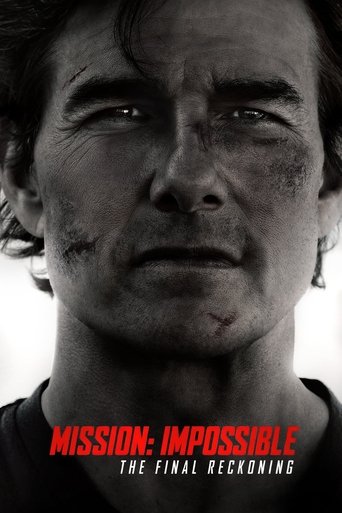
Mission: Impossible: The Final Reckoning follows Ethan Hunt and his team as they try to stop a powerful AI system capable of manipulating global information and pushing the world toward chaos. Originally titled Dead Reckoning Part Two, the film is now being sold as the conclusion to Ethan Hunt’s story.
BACKGROUND
A series once defined by how different each entry felt from one director to the next started to lose some of that identity when Christopher McQuarrie returned for a third time. His more action-driven approach served the franchise extremely well in his first two films, still regarded by many as its high point. But over time, that approach became heavier, more self-important, and increasingly committed to turning the series into one continuous saga. Dead Reckoning Part One exposed those limits clearly and often felt like a chore, and its weaker audience response seemed to push Paramount to rethink the marketing. With The Final Reckoning, the studio retitled the film and leaned harder on a sense of epic finality, presenting it more directly as the franchise’s true concluding chapter.
EXECUTION
Does McQuarrie succeed? To a point, yes. The film gives Ethan Hunt a satisfying sense of closure and delivers two major set pieces that belong among the franchise’s best. That alone puts it above its predecessor, and perhaps above Mission: Impossible 2, but not above the rest of the series.
Still, for a franchise built on tension, momentum, and spectacle, the sense of fun feels mostly gone at this stage. The tone is relentlessly serious, and the score is so aggressive in insisting that the world is about to end that it becomes exhausting. Add to that the constant (and needless) callbacks to earlier films, especially the first and third, and the movie starts to feel oddly thin. Despite being the longest entry, it often seems like less is happening.
That problem is most apparent in the first 90 minutes, which are largely spent arranging pieces, recapping the previous film, and preparing for the finale. The plot is both convoluted and basic, once again turning a fairly standard franchise setup into something far more complicated than it needs to be. It quickly falls back on the same tired “the higher-ups do not trust Ethan” conflict for the 27th time. This time, the team chemistry is not strong enough to rescue it.
To keep things moving and to recontextualize audiences from the previous film, much of this first half is built around conversations in which characters explain information to each other, often things they should already know, while McQuarrie cuts between them in different places and times to make it snappy and dynamic. Because the information itself is so uninteresting, the technique gets in the way more, and a simpler explanation would, ironically, improve the rhythm. A more direct approach would likely have helped the rhythm. And despite the ominous montage work and the overbearing score, the unseen villain never feels truly threatening. The film keeps telling us how dangerous it is, but, like the previous one, the dread is never felt.
By this point, Ethan Hunt has been pushed so far into myth that the film nearly treats him like a modern Jesus. Characters speak of him as if he alone can save the world. Tom Cruise is still completely committed, and his presence carries a lot of weight, but there is not much left to discover about Ethan. That becomes even more frustrating after the baffling decision in the previous film to kill off Rebecca Ferguson’s character in favor of a much blander younger love interest, still one of the franchise’s worst choices.
Hayley Atwell’s character remains bland, Ving Rhames, Simon Pegg, and Angela Bassett have never felt less engaging, and Pom Klementieff is handed an arc that will likely remind many viewers of The Boys. More than anything, the movie misjudges how much affection or curiosity these characters still inspire, giving their arcs a dramatic importance that is not often justified.
The movie finally comes alive once it remembers that these characters are supposed to be on a mission. The two major action sequences are strong enough to justify seeing the film on the biggest screen possible. The first takes place in a submarine, where the score finally quiets, and McQuarrie uses the underwater setting to build suspense with real patience. It becomes almost unbearable in the best way. Honestly, the film might have been better if it had reached this scene much sooner.
The second high point is the climactic airplane sequence, which stands alongside the best aerial action the franchise has done. I still think the Burj Khalifa set piece in Ghost Protocol remains the series’ peak, but this sequence, with Cruise jumping from one plane to another and the stunt work escalating into something genuinely jaw-dropping, is a very close second. It also ends on a note that is both memorable and surprisingly funny.
AFTERTASTE
Mission: Impossible: The Final Reckoning is a serviceable franchise conclusion built around two superb set pieces and one of the series’ least engaging plots. The supporting players and antagonists are among the weakest the franchise has had, and the attempt to tie everything together turns much of the first half into a laborious exercise. It improves as it goes, and the ending does offer satisfying closure. But taken together with Dead Reckoning Part One, this film makes a strong case that Fallout should have been the true ending of the series.
- 1Sentimental Value
- 2Hamnet
- 3One Battle After Another
- 4Ne Zha 2
- 5Blue Moon
- 142Mission: Impossible – The Final Reckoning#142 of 256
- 1Sentimental Value
- 2Sirāt
- 3The Plague
- 4Arco
- 5Resurrection
- 18Mission: Impossible – The Final Reckoning#18 of 28
- Where to watch
 Paramount Plus
- Where to watch
 Netflix
 Play trailer


- Original title
- Mission: Impossible – The Final Reckoning
- Director
- Christopher McQuarrie
- Cast
- Tom Cruise, Hayley Atwell, Ving Rhames, Simon Pegg, Esai Morales, Pom Klementieff, Henry Czerny, Holt McCallany
- Rated
- PG-13
- Screenwriter
- Christopher McQuarrie, Erik Jendresen
- Composer
- Lalo Schifrin, Max Aruj, Alfie Godfrey
- Cinematography
- Fraser Taggart
- Editor
- Eddie Hamilton
- Country

- Language
- English
- Budget
- $400 million
- Box office
- $598.767 million