
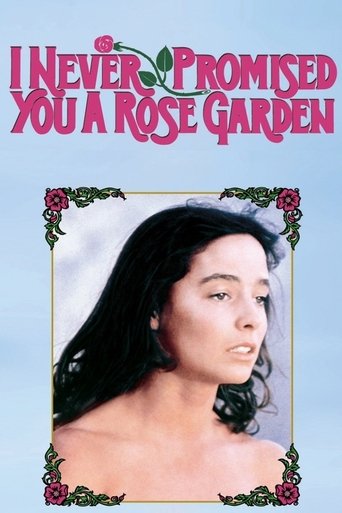

I Never Promised You a Rose Garden is an adaptation of Joanne Greenberg’s 1964 autobiographical novel about Deborah Blau, a 16-year-old girl institutionalized for schizophrenia who retreats into visions of an imagined, indigenous-inspired world as a coping mechanism. Greenlit after the overwhelming success of One Flew Over the Cuckoo’s Nest (1975), this film offers a more intimate, insider perspective on mental illness, focusing on what a compassionate and constructive form of treatment might look like.
We never get a clear sense of how much time has passed during Deborah’s stay in the institution, but the film effectively conveys that she has endured a long and difficult journey. Early on, through restrained and economic dialogue from her parents, we immediately grasp the emotional toll that her condition has taken on the family. The director frequently returns to ritualistic chants and symbolic visions to immerse us in Deborah’s fragmented perspective. Whether or not the depiction feels authentic—reactions over the years have been mixed, including from Greenberg herself—it undeniably fostered a deep sense of compassion in me, not just for Deborah but for the other patients in the facility as well.
There are moments when some of the patients’ behaviors might be played for laughs, but a persistent undercurrent of sadness grounds the film. These individuals are shown as trapped, forced to live alongside a relentless and often cruel internal companion. In this regard, Bibi Andersson’s portrayal of Dr. Fried—the therapist loosely based on Frieda Fromm-Reichmann—is quietly powerful. She comes across as deeply empathetic yet visibly worn down by the emotional weight of her work. She’s the antithesis of Nurse Ratched: not a symbol of power, but a reminder of how care can exist even in imperfect systems. The film acknowledges the corruption and failings of the institution (some of the nurses are outright cruel), while also subtly questioning how any caregiver could maintain their own mental health in such a burdened environment.
The therapy sessions provide some strong moments of insight, particularly the scene where the film’s title is spoken—a poignant reflection on the limits of what healing can offer. These exchanges are accessible and well-written, likely contributing to the film’s nomination for Best Adapted Screenplay at the Oscars. While I Never Promised You a Rose Garden may not offer a fully realistic portrait of psychiatric care, its authentic performances and deeply empathetic tone allow us to see these characters with new eyes. In that sense, it succeeds—especially in its final moments, which are as hopeful as they are moving.
- 1Sorcerer
- 2Annie Hall
- 3The Ascent
- 4Star Wars
- 5Close Encounters of the Third Kind
- 20I Never Promised You a Rose Garden#20 of 40
- Where to watch
- Not available for streaming
- Where to watch
- Not available for streaming
 Play trailer


- Original title
- I Never Promised You a Rose Garden
- Director
- Anthony Page
- Genre
- Drama
- Cast
- Kathleen Quinlan, Bibi Andersson, Ben Piazza, Lorraine Gary, Martine Bartlett, Margo Ann Berdeshevsky, Darlene Craviotto, Reni Santoni
- Rated
- R
- Screenwriter
- Gavin Lambert, Lewis John Carlino
- Composer
- Paul Chihara
- Cinematography
- Bruce Logan
- Editor
- Garth Craven
- Country

- Language
- English
- Budget
- $3 million