
OVERVIEW
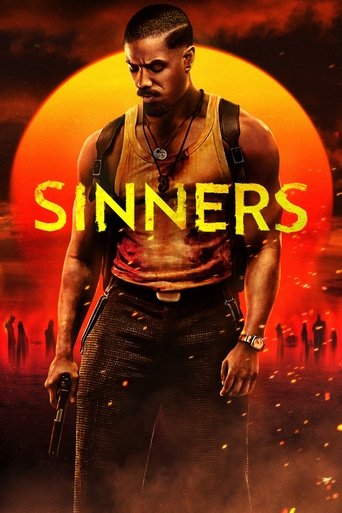
Sinners is a period horror drama driven by music, directed by Ryan Coogler. It follows twin brothers (both played by Michael B. Jordan) returning to Mississippi after a brutal stretch in Chicago, looking to build something on their own terms. They decide to open a joint, a place where people from their community can come together for a few hours, hear real music, and breathe. Their cousin, Little Sammy, is one of the main acts, a preacher kid with a voice that feels too pure for its own good. In this world, that kind of music draws attention, and not the kind you want.
BACKGROUND
Like the twin brothers at the start of the film, Ryan Coogler has spent the last decade proving he could thrive on someone else’s terms. After breaking out with the Sundance hit, deeply personal Fruitvale Station (2013), he shifted into studio filmmaking with Creed and the Black Panther films, delivering big-scale spectacle inside established franchises without losing the human core (Black Panther was the first, and still the only, MCU film to earn a Best Picture nomination at the Oscars). Five films in, he seemed ready to move beyond existing frameworks and make something more fully his own.
Sinners became that pivot point: a project that sparked a studio bidding war, landed at Warner Bros. in early 2024, and reportedly came with unusually filmmaker-friendly leverage and long-term ownership terms, making it a rare auteur-driven original blockbuster shaped around one filmmaker’s voice. Set in the 1932 Mississippi Delta and rooted in Coogler’s family history, the film became a major hit for Warner Bros., proving that experimentation can still play at full theatrical scale in today’s sequel-driven landscape.
EXECUTION
The film ends up crowd-pleasing and packed with personality and ideas, like a culmination of everything Coogler has learned. It has the rawness of Fruitvale Station, the icon-making instincts of Creed, and the audience-savvy muscle he sharpened inside the MCU machine. It is also unpredictable and bold in the story, the technical choices, and the themes that Coogler is willing to put on the table.
He guides the narrative and its genre-blending shifts with impressive confidence, taking its time with its characters while being very efficient in constructing a great sense of setting and place. As horror crashes with the more grounded first act, it all feels character-focused and not played for spectacle’s sake.
The technical aspects are fantastic and deserving of many Oscar nominations, but the performances are just as crucial. Jordan avoids turning the twins into clean opposites, which makes their bond more believable. He also conveys their exhaustion and regret in a subtle, effective way. Miles Caton, who plays Sam, is a real discovery. He’s got this quiet presence and a spectacular voice, capturing the character’s curiosity and naivete without ever making him seem dumb or overly innocent. Hailee Steinfeld gives a more mature spin on her True Grit performance, Jack O’Connell is terrifying and extremely charismatic, Delroy Lindo, no surprise, steals every scene he’s in. Even the most minor roles stick with you: the girl who watches the car, or the guy who’s supposed to guard the joint.
Coogler takes his time with the characters, and because of that, most of the film’s tension comes from their interactions, not cheap scares. There are a lot of slow-burning dialogue scenes, clearly taking cues from Rodriguez and Tarantino (not the only cues he borrows from them)—conversations that stretch just long enough to keep you on edge, making their payoffs extra satisfying. But the most memorable moments are the musical set pieces, which are honestly stunning. Coogler and Ludwig Göransson have worked well together before (the Creed workout montage and Black Panther action sequences are among the best-scored moments of the 2010s), but they top them all here. One mid-film sequence that expertly chronicles the evolution of Black music, shot in a single IMAX take with some assistance from Nolan, is truly breathtaking.
Behind all the spectacle, the film’s heart is in its central metaphor. Sinners is about cultural ownership. The monsters represent how Black art and expression are drained, flattened, and repackaged by corporations into something marketable. Black artists are forced to choose: compromise and be accepted, or protect their voice at all costs. Some characters adapt and even learn to enjoy it. Others would rather risk everything than be diluted. Coogler doesn’t hammer the message, but it lands.
I wish the film didn’t start with a flash-forward only to go back a day earlier; it would have been better to let the mystery develop more gradually. And the post-credit scene, especially the first one, would’ve worked better if it had been integrated into the film itself. But these are small issues in a movie that gets so much right. Sinners is the kind of big, bold, emotionally layered film we rarely get anymore. It’s unpredictable, wildly entertaining, and still leaves you with plenty to unpack afterward.
Here’s hoping Coogler keeps going down this path. Just as long as no monsters come for his creative freedom.
- 1Sentimental Value
- 2Hamnet
- 3One Battle After Another
- 4Ne Zha 2
- 5Blue Moon
- 9Sinners#9 of 256
- Where to watch
 Crave
Crave- Where to watch
 Max
Max
 Play trailer


- Original title
- Sinners
- Director
- Ryan Coogler
- Cast
- Michael B. Jordan, Hailee Steinfeld, Miles Caton, Jack O'Connell, Wunmi Mosaku, Jayme Lawson, Omar Benson Miller, Delroy Lindo
- Rated
- 14A
- Screenwriter
- Ryan Coogler
- Composer
- Ludwig Göransson
- Cinematography
- Autumn Durald Arkapaw
- Editor
- Michael P. Shawver
- Country

- Language
- English
- Budget
- $100 million
- Box office
- $371.369 million