
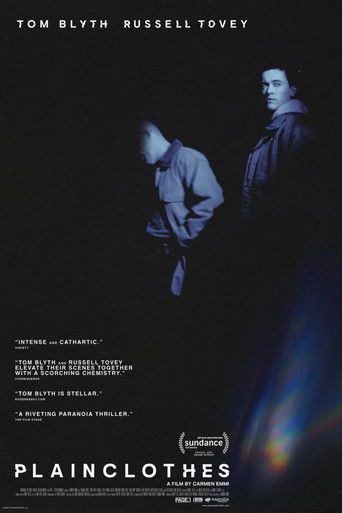
Lucas is a cop whose job is to lure gay men into arrests, posing as one himself and waiting for them to make a move in public spaces before taking them in. The problem is… he might be enjoying the job a little too much. As he starts to see himself reflected in the men he’s chasing, the lines between duty and identity blur. Maybe he’s gay after all?
With that premise, Plainclothes explores both Lucas’s struggle to come to terms with his repressed sexuality and the tension of his double life. It plays like a low-key thriller as Lucas begins making choices that need to be kept secret, not just from his family, but from the very system he serves. The job itself becomes more dangerous because of what he’s hiding.
The film’s plot isn’t too far removed from last year’s Hit Man. Both films center on law enforcement figures who manufacture crimes until one case shakes them, forcing them to question their orders. But where Hit Man leaned into charm and comedy, Plainclothes builds a suffocating atmosphere, heightening tension with quick cuts and a grainy VHS aesthetic that makes it feel like Lucas is always being watched.
It’s an engaging film, anchored by two strong performances. Tom Blyth fully inhabits Lucas, selling both his confusion and repressed emotions, while Russell Tovey, as Andrew, the man Lucas becomes interested in, portrays a character weighed down by regret and guilt. Their dynamic is strong enough to sustain the film, but neither the story nor their relationship ever pushes beyond the surface. It starts to dig in but never fully commits to something deeper.
That said, there are strong aspects to the script. The back-and-forth between timelines works surprisingly well, and it’s refreshing that Lucas doesn’t fall into the usual deception tropes. When asked by Andrew about his job, he doesn’t lie, he plainly states that he’s a cop. The direction is competent, effectively illustrating Lucas’s growing paranoia and the sense that people are always watching or talking about him. Yet, for a film with this premise, it never reaches a truly high-tension moment. The biggest dramatic explosion comes from a particularly unpleasant uncle (rather than Lucas’ job or conflicts with his sexuality), in a scene that doesn’t fully tie into the main themes.
Plainclothes lays out its premise well in the first act but doesn’t build on it as much as it could. The tension simmers without ever boiling over, and while it remains compelling, it stops short of being truly gripping.
- 1Sentimental Value
- 2Hamnet
- 3One Battle After Another
- 4Ne Zha 2
- 5Blue Moon
- 127Plainclothes#127 of 256
- 1Kiss of the Spider Woman
- 2The Ballad of Wallis Island
- 3The Wedding Banquet
- 4Together
- 5Twinless
- 15Plainclothes#15 of 27
- Where to watch
 Mubi
Mubi- Where to watch
- Rent or buy at Apple TV Store, Amazon Video
 Play trailer


- Original title
- Plainclothes
- Director
- Carmen Emmi
- Cast
- Tom Blyth, Russell Tovey, Amy Forsyth, Maria Dizzia, Christian Cooke, Gabe Fazio, John Bedford Lloyd, Sam Asa Brownstein
- Screenwriter
- Carmen Emmi
- Composer
- Emily Wells
- Cinematography
- Ethan Palmer
- Editor
- Erik Vogt-Nilsen
- Country


- Language
- English