
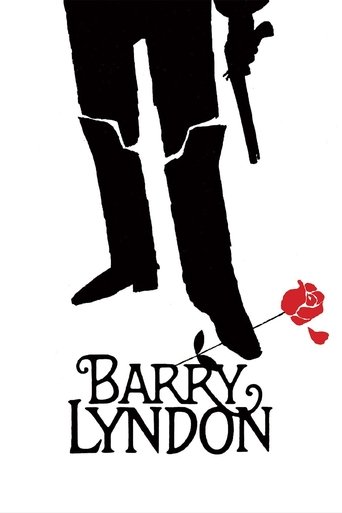
Assessing Barry Lyndon is like assessing the classical music that forms its soundtrack: precise, technically flawless, and highly influential, yet perhaps too precise for its own good. Like classical music or a classic painting, it’s easy to understand and appreciate what the film conveys, yet one will have an easier time explaining what the director intended than actually being moved by it. Director Stanley Kubrick’s dedication to creating his “classic piece” is undeniable, and in that, he succeeds, there’s virtually nothing to fault in its presentation. This three-hour epic, set in the 18th century and based on an 1844 novel, somehow makes its slow, deliberate pace captivating. Yet, despite its craftsmanship, Kubrick doesn’t seem to focus on eliciting an emotional reaction, which ultimately makes it less impactful than other films considered ‘the best of the best’.
Starting with the film’s strengths, Barry Lyndon is meticulously crafted. The cinematography is exceptional, with each frame worthy of a painting. Kubrick’s attention to detail, from the costumes to the classical compositions and precise camera movements, creates a mesmerizing period atmosphere. The lighting, famously done using only natural and candlelight, transforms every shot into a work of art. Visually, it’s stunning. The recreation of the period isn’t limited to costumes, music, and sets. The way the battles are staged and how the characters interact transport the audience to this historical world in a way that few films do.
The film also maintains its pacing surprisingly well for a three-hour runtime. While the narrative scope is limited, Kubrick’s use of narration and dry humor keeps it engaging, especially in the first half, where the storytelling is efficient and immersive. The characters are well-defined, and the script shows clear care. However, two significant aspects hold the film back from being considered among the greatest films ever made, as it is often regarded.
First, there’s a disconnect between the two halves of the film. It plays out almost like an anthology of Barry Lyndon‘s life, and maybe, with the chapters, that was the intent. Yet, while watching such a journey, it’s a bit frustrating not to see payoffs for the events of the first act in the second. It feels as though the entire first half serves as an introduction to the real story that begins in the second half, which is problematic for two reasons: the first half is far more engaging, and it’s too long to function solely as an introduction.
The second issue lies in the director’s seeming disinterest in provoking a strong emotional impact. A cold, arms-length approach works well for a film like 2001: A Space Odyssey, but for an epic about the rise and fall of a character that aims to explore the consequences of ambition and dehumanization, it almost requires a bit more drama, which remains subdued by the film’s end. Part of the fault lies in the casting of its main characters. Ryan O’Neal captures Barry’s youthful charm in the beginning, but in the second half, his performance lacks the depth to convey the weight of Barry’s experiences. His portrayal feels a bit too restrained, missing the opportunity to show the transformation his journey brings. Marisa Berenson certainly looks the part but keeps her reactions deliberately ambiguous, leaving us without a clear sense of how these events have truly affected her and those around her. All of Kubrick’s decisions after a key confrontation with a gun keep the emotional impact at arm’s length.
- 1One Flew Over the Cuckoo's Nest
- 2Dersu Uzala
- 3Jaws
- 4Nashville
- 5Manila in the Claws of Light
- 6Barry Lyndon#6 of 51
- Where to watch
- Rent or buy at Apple TV Store, Google Play Movies, YouTube, Amazon Video
- Where to watch
- Rent or buy at Apple TV Store, Amazon Video
 Play trailer


- Original title
- Barry Lyndon
- Director
- Stanley Kubrick
- Cast
- Ryan O'Neal, Marisa Berenson, Patrick Magee, Hardy Krüger, Steven Berkoff, Gay Hamilton, Marie Kean, Diana Körner
- Rated
- PG
- Screenwriter
- Stanley Kubrick
- Composer
- Leonard Rosenman
- Cinematography
- John Alcott, Patrick Carey
- Editor
- Tony Lawson
- Country


- Language
- English
- Budget
- $11 million
- Box office
- $31.5 million