
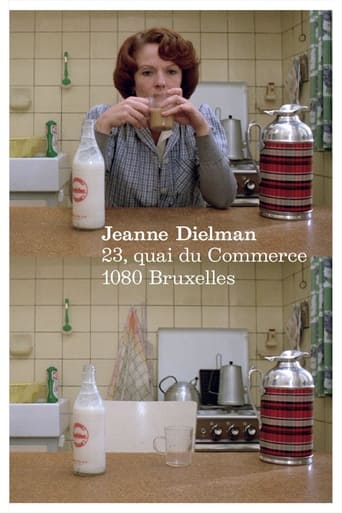
Alfred Hitchcock once said, “Drama is life with the dull bits cut out.” Jeanne Dielman, 23, quai du Commerce, 1080 Bruxelles, directed by Chantal Akerman, essentially invented a genre that does the opposite. Released in 1975, this film zooms in on the “dull bits” of one woman’s life with meticulous, unblinking detail, turning routine into a powerful statement about unnoticed labor and isolation. Widely regarded as a pioneering work of feminist and avant-garde cinema, Jeanne Dielman is credited with launching “slow cinema”, a genre that forgoes fast-paced storytelling and instead invites viewers to linger on everyday actions, letting them sink into the pace of real life. This approach has a strong following among cinephiles and critics, celebrated for its emphasis on patience and quiet observation. But does simply feeling “real” always make something profound?
The story itself is simple yet unsettling. Over three days, we follow Jeanne Dielman, a widowed mother, as she performs her daily routine in her cramped apartment. Each task, cooking, cleaning, running errands, is executed with clockwork precision, occasionally interrupted by sex work to support her and her teenage son. Delphine Seyrig’s restrained performance captures Jeanne as a woman defined by the repetition and monotony of her life. Akerman’s camera stays fixed, forcing us to experience these mundane activities alongside Jeanne. With minimal dialogue and an intentionally slow pace, the film quietly exposes the toll of invisible labor, showing how routine itself can feel like a form of confinement.
The film builds great empathy for Jeanne and invites reflection. Watching her meticulously polish shoes or wash dishes reminded me of my own mother and how her day often revolved around similar tasks before the family returned home. Through these repetitive actions, we glimpse the silent effort that defines Jeanne’s, and, by extension, many women’s, lives. When a small disruption in her routine triggers a shift in her behavior, we see her carefully controlled world start to unravel, and it’s unsettling to watch her unspoken crisis come to the surface.
Jeanne Dielman succeeds in making us think, sympathize, and reflect on deeper themes. But does that mean it earns its acclaim as a cinematic masterpiece? While the film conveys its message through subtle performances and careful craftsmanship, I tend to appreciate directors who say more with less, minimal runtime, maximum impact. In this case, Jeanne Dielman feels heavy-handed, relying on an excessive runtime to get its point across. Do we really need to see her waiting for the coffee to brew or taking the elevator multiple times? The same impact, perhaps even a greater one, could have been achieved in half the time, with one or two scenes carefully extended to highlight crucial moments instead of prolonging every single action. In that sense, the film’s method feels a bit like overkill, as if length alone equates to substance.
Ultimately, while Jeanne Dielman is a significant work in cinema, its lengthy exploration of the mundane left me wondering if less could have said more.
- 1Rocky
- 2Taxi Driver
- 3Assault on Precinct 13
- 4Kings of the Road
- 5All the President's Men
- 37Jeanne Dielman, 23, quai du Commerce, 1080 Bruxelles#37 of 51
- Where to watch
- Rent or buy at Apple TV Store
- Where to watch
- Not available for streaming
 Play trailer


- Original title
- Jeanne Dielman, 23, quai du Commerce, 1080 Bruxelles
- Director
- Chantal Akerman
- Genre
- Drama
- Cast
- Delphine Seyrig, Jan Decorte, Henri Storck, Jacques Doniol-Valcroze, Yves Bical, Chantal Akerman
- Rated
- NR
- Screenwriter
- Chantal Akerman
- Cinematography
- Babette Mangolte
- Editor
- Patricia Canino
- Country


- Language
- French
- Budget
- 120000